A high-pressure cleaning truck improves urban road maintenance by combining wide-area water delivery with targeted jet cleaning. For municipalities, facility teams, and contractors, an electric platform can cover routine road washing, dust suppression, curb cleaning, public-square maintenance, and selected highway, port, and dock tasks in one mobile unit. The practical value comes from matching each spray function to the surface and the route, rather than treating every job as simple watering.
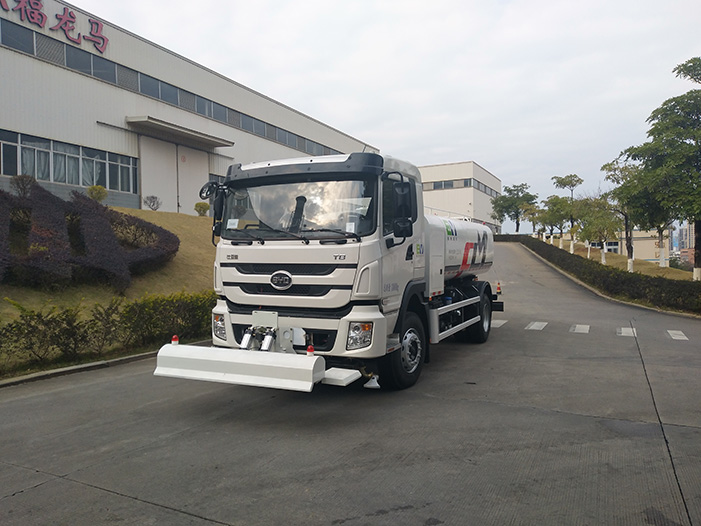
Why High-Pressure Cleaning Trucks Matter
Road maintenance often involves more than removing loose dust. Dried mud, tire marks, sediment near curbs, and deposits on hard surfaces can remain after a light spray pass. A high-pressure cleaning truck gives operators a second level of control: broad flushing for open pavement and a focused rear water gun for stains or surfaces that need a more direct stream.
That combination helps a street washing truck support several routines without changing the basic vehicle platform. It can water a public square, rinse a road edge, reduce airborne dust on a route, or direct water toward a guardrail and other elevated targets. The same operating logic also suits municipal cleaning equipment programs that need one vehicle to serve different districts and surface conditions.
How Electric Water Delivery Supports Daily Routes
Wide coverage for open pavement
FULONGMA electric high-pressure cleaning truck range is built around several water-delivery modes. The official configurations show a flushing width of at least 24 m and a sprinkling width of at least 16 m, giving route planners a way to distinguish between forceful surface flushing and broader watering or dust-control coverage. These figures are most useful when connected to the actual road width, lane pattern, and traffic-control plan.
On a public square or a broad access road, a wide spray pattern reduces the need for repeated passes. On narrower streets, operators can choose a more controlled setting so water reaches the working surface without unnecessary overspray. The benefit is not simply a larger number; it is the ability to adjust the method to the geometry of the site.
Targeted cleaning for difficult surfaces
The rear high-pressure water gun is useful when a flat road spray cannot reach the problem area. Its range is shown as at least 50 m, and its working angle allows operators to address different target heights and difficult-to-clean spots. The spray can be adjusted between a column and a mist, which supports concentrated washing as well as a softer distribution of water when the task calls for it.
This makes the rear gun relevant to curb and guardrail washing, equipment yards, building approaches, and selected port or dock surfaces. It also has an auxiliary firefighting function, giving the vehicle an additional response capability without changing its main sanitation role. That function should still be planned around local operating procedures and site safety requirements.
Where a Electric Water Sprinkler Truck Fits Best
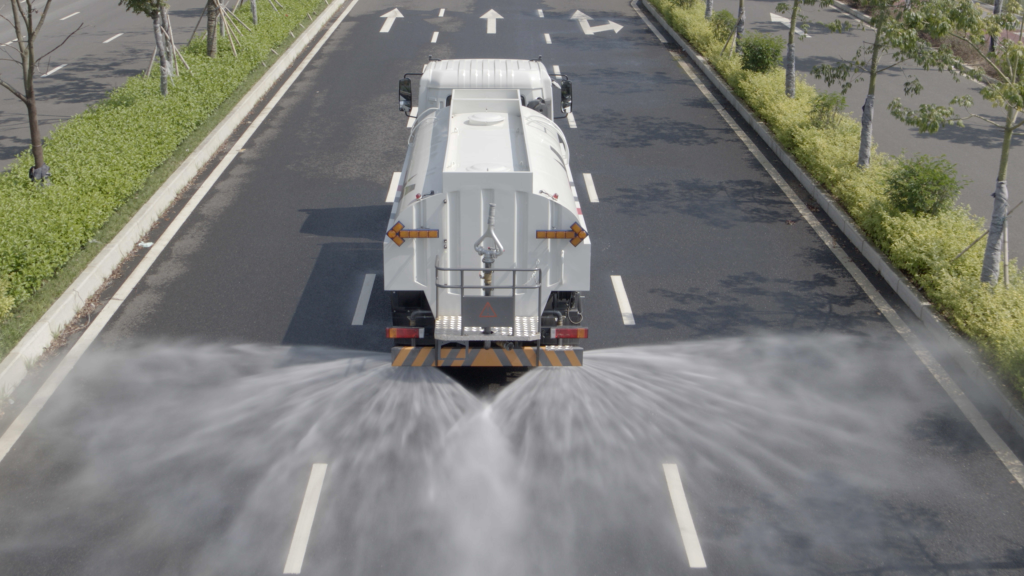
Urban roads and public squares
Urban routes benefit from a vehicle that can move between routine watering and more deliberate washing. An electric water truck can service road lanes, pedestrian-area edges, civic plazas, and paved entrances where dust, mud, and surface residue affect cleanliness. The operator can start with a broad pass and use the rear gun only where localized attention is needed.
Curbs, guardrails, and elevated targets
Curbs and guardrails are difficult because the cleaning target is offset from the vehicle path. A side or rear device can be selected according to the site, while the rear gun provides a flexible option for higher or less accessible surfaces. FULONGMA also lists optional upper and lower spraying, side watering, sewer dredging, and related devices, allowing a sanitation department to consider the route as a complete work system.
Highways, ports, and docks
Highways, port areas, and docks often combine long paved stretches with dust, mud, and operational residue. A multi-function water truck can be scheduled for wider surface work and then redirected to access lanes, loading approaches, or perimeter areas. The route plan should account for water availability, traffic separation, and the need to keep spray away from sensitive equipment or public movement zones.
How FULONGMA Configurations Support Different Routes
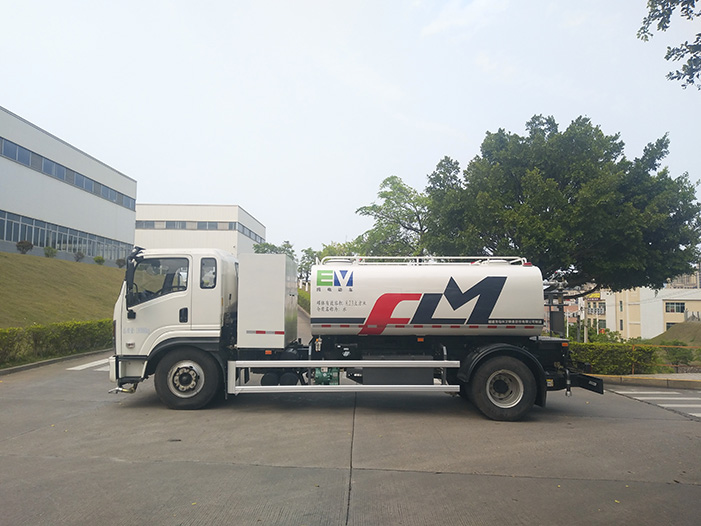
The FLM5180GQXHDBEV configuration lists a 350.08 kWh battery, a 120 kW rated chassis motor, an 8.23 m³ water tank, and a 50 m³/h sprinkler pump flow. The FLM5180GQXBYBEV configuration lists a 217.6 kWh battery, a 150 kW rated chassis motor, an 8.12 m³ water tank, a cleaning width of at least 3 m, and the RTX150.100N high-pressure pump model. Both configurations use a lithium iron phosphate battery.
These differences matter because route design is rarely one-dimensional. A team focused on broad watering and mixed municipal work may evaluate tank volume and coverage first. A team centered on more defined cleaning lanes may give greater attention to the stated cleaning width and high-pressure system. The right comparison starts with the route, then checks which configuration supports that work pattern.
Conclusion
A high-pressure cleaning truck is most valuable when its water-delivery options are connected to real route conditions. Broad flushing handles open pavement, controlled sprinkling supports dust suppression, and the rear gun reaches stains, curbs, guardrails, and higher targets. With its electric platform, configurable devices, low-water-level alarm, and two available configurations, FULONGMA gives road-maintenance teams a practical basis for building a more versatile municipal cleaning workflow.
Contact FULONGMA today to discuss the right configuration for your municipal cleaning needs.
FAQ
Q: What is a high-pressure cleaning truck used for?
A: It is used for road washing, public-square maintenance, dust suppression, curb and guardrail cleaning, watering, and selected work in highways, ports, and docks. Its value comes from combining broad water coverage with a rear high-pressure gun that can direct water toward difficult stains and targets at different heights.
Q: Can an electric water truck handle both watering and washing?
A: Yes. The FULONGMA configurations provide separate flushing and sprinkling functions, while the rear water gun supports a concentrated column or a mist pattern. This lets one vehicle move between routine watering, wider dust-control work, and more targeted surface cleaning according to the route.
Q: Why is a rear water gun useful on a electric water sprinkler truck?
A: A rear water gun reaches areas that fixed lower spray points may miss, including higher surfaces, guardrails, difficult stains, and offset edges. The FULONGMA gun is listed with a range of at least 50 m and can adjust its spray form, making it useful for controlled, task-specific work.
Q: What should municipalities check before selecting a model?
A: Start with the route profile: road width, cleaning targets, dust-control needs, water supply, and operating locations. Then compare tank volume, coverage widths, pump information, battery capacity, and optional devices. FULONGMA offers two configurations with different stated specifications, so the work pattern should guide the final choice.