

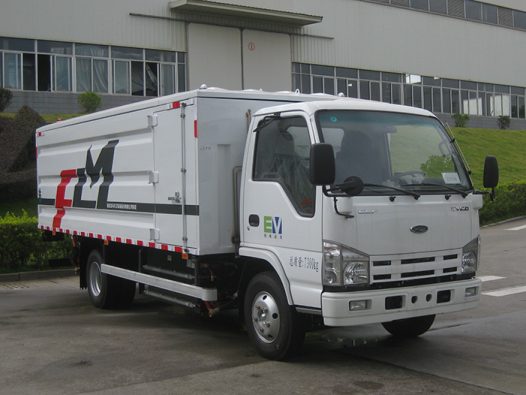
An electric garbage truck improves sealed dustbin collection by moving filled bins as complete units inside a closed carriage waste body instead of exposing loose waste during short transfer routes. FULONGMA applies this idea to an all-electric sealed dustbin transfer truck-FLM5070XTYQLBEV built for residential streets, communities, and waste transfer stations, where cleanliness, predictable handling, and quieter local operation all matter.
The value is in the full workflow, not only the drive system. A closed body carries standard dustbins, while an electronically controlled hydraulic liftgate loads or unloads two bins in one cycle. For route managers comparing an electric waste transfer truck with ordinary collection equipment, this layout offers a practical way to reduce scattering, leakage, and repeated manual lifting.
Why Sealed Dustbin Transfer Matters in Urban Waste Operations
Urban waste work often starts in narrow lanes and shared community spaces before the bins reach a receiving point. If the waste is tipped too early or moved on an exposed platform, the route may face odor, liquid leakage, and extra cleaning. A sealed dustbin transfer truck changes the sequence by keeping the bin and its contents together until unloading.
Cleaner Movement Between Collection Points
A closed waste body helps keep public-facing streets cleaner because filled dustbins stay inside the vehicle during transport. The arrangement is especially useful when multiple collection points feed into one waste transfer station. The vehicle also includes a drainage collection arrangement for liquid that may escape from bins during movement.
Better Separation from Loose Waste
Whole-bin transport avoids turning a local collection route into a loose-waste handling process. Operators can focus on positioning, lifting, securing, and returning containers rather than cleaning scattered refuse from the road. That difference matters in communities where sanitation work happens close to residents, parked vehicles, and small storefronts.
How an Electric Garbage Truck Supports Sealed Waste Transfer
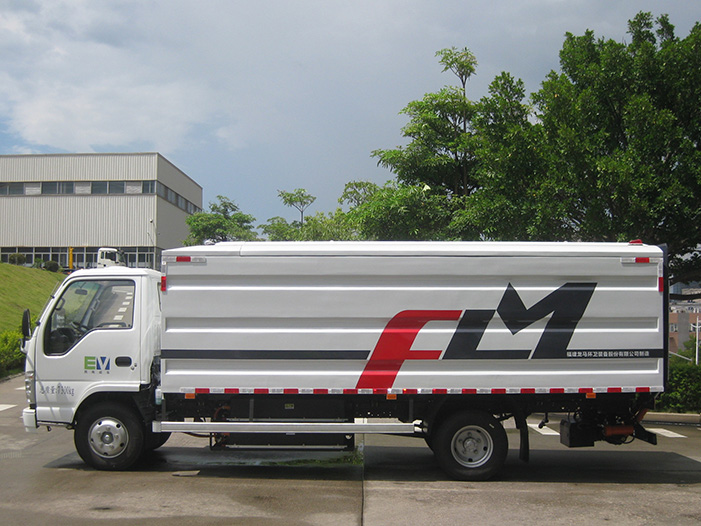
The FLM5070XTYQLBEV is best understood as a coordinated lifting and transfer platform. The electric chassis provides the driving power, while the closed waste body and rear liftgate handle the container workflow. FULONGMA places this solution within its BEV sealed garbage bin carrier range, reflecting its role in whole-bin collection rather than loose-waste compaction.
Two-Bin Hydraulic Liftgate
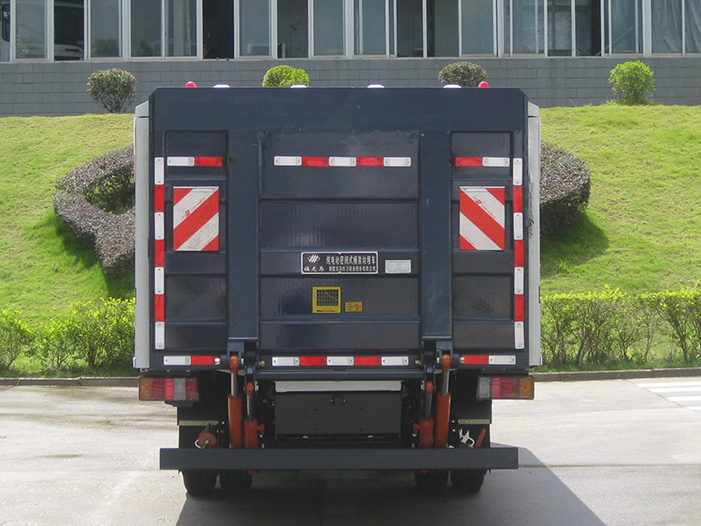
On the FLM5070XTYQLBEV, the electronically controlled hydraulic liftgate raises and lowers two dustbins in one loading or unloading cycle. Its liftgate tipping angle is 90 degrees, the complete cycle is no more than 30 seconds, and the listed lifting capacity is at least 1,000 kg. In daily work, those details help operators maintain a steady rhythm across repeated stops.
Closed Body for Standard Bins
The waste body is designed for standard dustbins, with capacity for 23 MGB 240L bins or 9 MGB 660L bins. A right-side opening supports empty-bin handling when the route calls for rearrangement or return movement. An optional positioning rod can also help limit bin sliding while the truck is traveling.
Matching the Truck to Different Dustbin Systems
Container compatibility should be confirmed before a fleet changes its collection method. This waste collection and transfer vehicle is specified for 240L and 660L standard dustbins, so route planning should include bin dimensions, loading orientation, aisle space, and the expected number of stops during each shift.
Applications for 240L and 660L Bins
The 23-bin figure for 240L containers suits routes with many small collection points, while the 9-bin figure for 660L containers fits larger shared waste areas. These quantities describe waste body capacity, while the two-bin liftgate figure describes one loading action. Keeping them separate helps planners compare route volume with actual handling time.
The vehicle has a stated travel range of 270 km and a top speed of 100 km/h. These figures are backed by a 153.84 kWh CATL LFP (lithium iron phosphate) battery pack and a 110 kW peak-output electric motor, both mounted on an Isuzu QL1071BEVECKA2Y electric chassis — a proven light-duty platform adapted for sanitation duty. The CATL battery system is engineered to handle the frequent stop-and-start patterns typical of waste collection routes, while the motor delivers responsive acceleration even with a full bin load.
Actual suitability still depends on payload, traffic, charging access, road grade, climate, and liftgate use. A sound route review compares the planned duty cycle with depot charging instead of treating range as the only decision point.
Safety Features for Loading and Unloading
A hydraulic liftgate works close to operators, bins, and road users, so control details affect daily performance. The FULONGMA system uses fixed and wired operating modes, an independent liftgate power switch, warning devices, and physical restraints to make the rear work area easier to manage.
Controls That Support Stop-and-Go Work
The operating button is designed to return when released, allowing the operator to stop movement quickly if a bin, person, or obstruction enters the working area. Reflective warning plates, a reflective warning flag, and a safety chain help define the extended liftgate zone. A descent-speed control system can also be specified for routes that need adjusted lowering behavior.
Where Electric Sealed Dustbin Transfer Works Best
The truck suits operations where teams need to move bins without opening the waste stream onto the roadway. Its external dimensions are 6,800 x 2,325 x 2,550 mm, so planners should check turning space, gate clearance, loading-bay width, and parking conditions before assigning it to a new service area.
Residential Streets and Community Routes
Residential streets benefit from a closed body because the vehicle can move filled bins with less exposure of waste. The electric configuration is also relevant where a fleet wants to reduce direct exhaust emissions on local routes, provided the depot can support charging.
Waste Transfer Stations
At a waste transfer station, the electric refuse truck can connect distributed bin points with a larger receiving operation. The sealed waste body keeps bins separated from the public road, while the liftgate supports repeatable unloading into a designated area.
What to Confirm Before Selecting an Electric Waste Transfer Truck
Start with the container system: confirm whether the route uses 240L bins, 660L bins, or a mixture, then record the number of bins handled per shift. Next, review loading-bay dimensions, road width, turning radius, transfer-station access, charging location, and the distance between collection points and the receiving site.
The operating plan should define how empty bins are returned, how leaked liquid is handled, who controls the liftgate, and how the vehicle is cleaned. For a route-specific review, operators can compare these needs with the FLM5070XTYQLBEV configuration and decide whether the loading capacity and sealed transfer method fit the service area.
Why FULONGMA Fits Sealed Waste Transfer Operations
FULONGMA’s solution is relevant when a sanitation fleet needs an operating concept rather than a chassis alone. The truck combines electric drive, enclosed transport, a hydraulic liftgate garbage truck workflow, fixed and wired controls, and optional bin-positioning equipment. That integration makes it easier to connect bin handling with route planning and transfer-station procedures.
Conclusion
An electric garbage truck delivers the most value when its energy system and waste-handling equipment solve the same route problem. For sealed dustbin transfer, that means keeping bins enclosed, reducing spillage, lifting two bins per cycle, and matching the waste body to containers already used by the service area. The FULONGMA FLM5070XTYQLBEV brings these functions together for residential streets, communities, and transfer-station links.
To evaluate the right configuration for your route, contact FULONGMA for application guidance with the bin sizes, route distance, loading conditions, and depot plan.
FAQ
Q: What is an electric sealed dustbin transfer truck used for?
A: It is used to collect and transport filled dustbins as complete units from residential streets, communities, and other collection points to a transfer station or receiving area. Its closed waste body helps limit garbage scattering and liquid leakage, while the hydraulic liftgate reduces the need for repeated manual lifting.
Q: How does a hydraulic liftgate improve dustbin transfer?
A: A hydraulic liftgate raises and lowers bins between the road surface and the waste body. The FULONGMA system can handle two dustbins in one operation, which helps standardize the loading cycle, reduce operator effort, and maintain a more predictable transfer rhythm on routes with frequent collection stops.
Q: How many dustbins can an electric waste transfer truck carry?
A: The stated arrangement supports up to 23 MGB 240L standard dustbins or 9 MGB 660L standard dustbins. These are total transport quantities, while the liftgate’s two-bin figure describes one loading or unloading action. The final capacity should be checked against the actual bin layout and route requirements.
Q: What should operators confirm before selecting an electric garbage truck?
A: Confirm bin sizes, daily collection volume, loading space, transfer distance, turning conditions, charging access, cleaning arrangements, and operator controls. It is also important to compare the planned duty cycle with the vehicle’s stated range and to define how empty bins, leaked liquid, inspections, and maintenance will be managed.