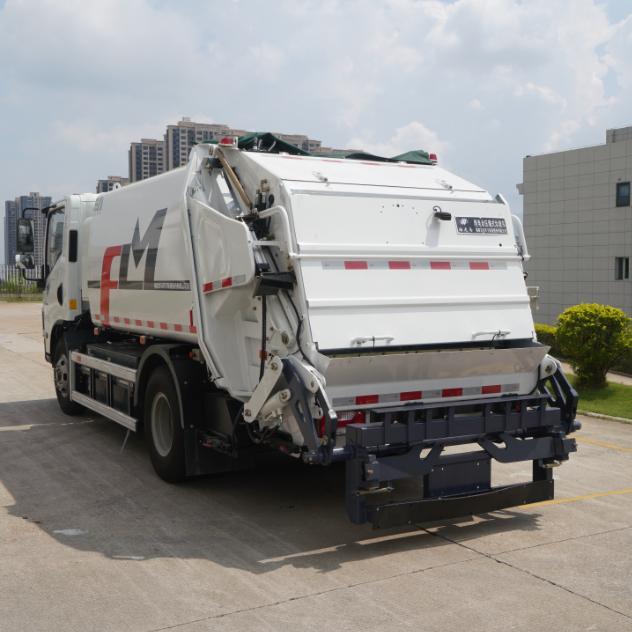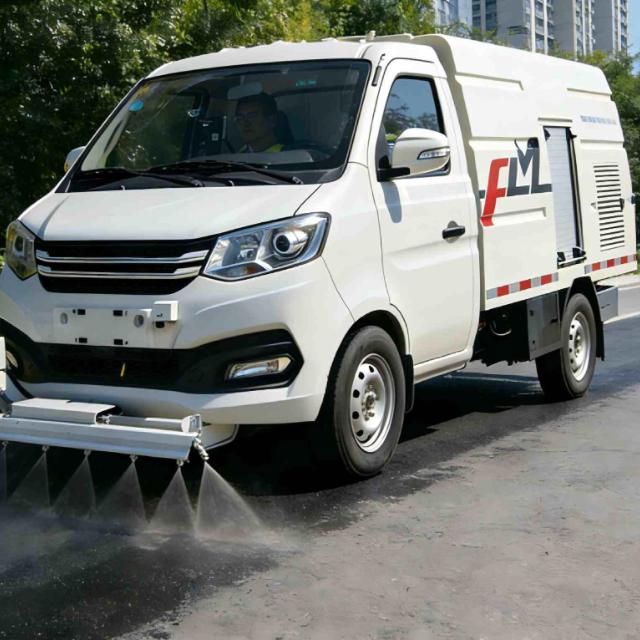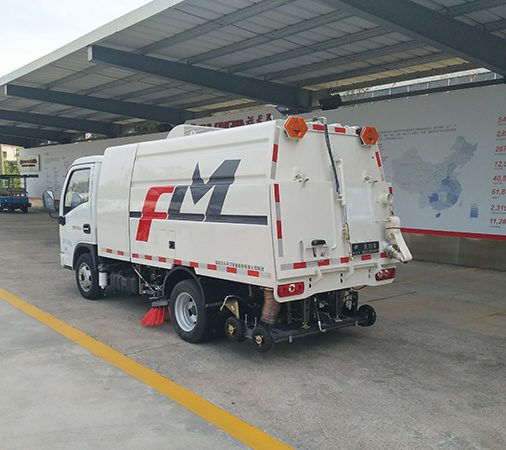
A garbage compressor improves urban waste transfer by reducing loose refuse volume, sealing odor and leachate inside the equipment, and giving collection teams a cleaner buffer between neighborhood pickup and final disposal. For cities that cannot expand transfer stations easily, a movable refuse compactor turns a small site into a controlled compression point. FULONGMA addresses this need with movable refuse compactor models that combine compression, storage, sealing, deodorizing, and safer loading in one compact unit.
Its strongest use case is making waste movement more predictable where space, odor control, traffic pressure, and service timing all matter at once. A well-placed compactor can receive refuse, compress it quickly, and hold it without letting the site become messy or exposed.
Why a Garbage Compressor Matters Before Waste Reaches the Truck
Urban waste problems often begin before a truck arrives. Loose refuse sits in bins, collection rooms, small transfer yards, or temporary neighborhood points where odors spread, liquid waste drips, and traffic windows are short. A garbage compressor changes that first stage by compacting waste close to the source and enclosing it until it can be moved onward.
This is especially useful in residential communities, food streets, school districts, parks, and mixed commercial blocks. These sites rarely have the land for a large fixed transfer station, yet they still need a reliable way to prevent scattered waste and repeated small truck trips. Movable equipment gives sanitation managers a cleaner middle step between daily pickup and centralized treatment.
The result is a more organized waste flow. Workers can focus on scheduled loading instead of emergency cleanup, while nearby residents see fewer exposed piles and fewer dirty collection points.
How A Movable Refuse Compactor Works
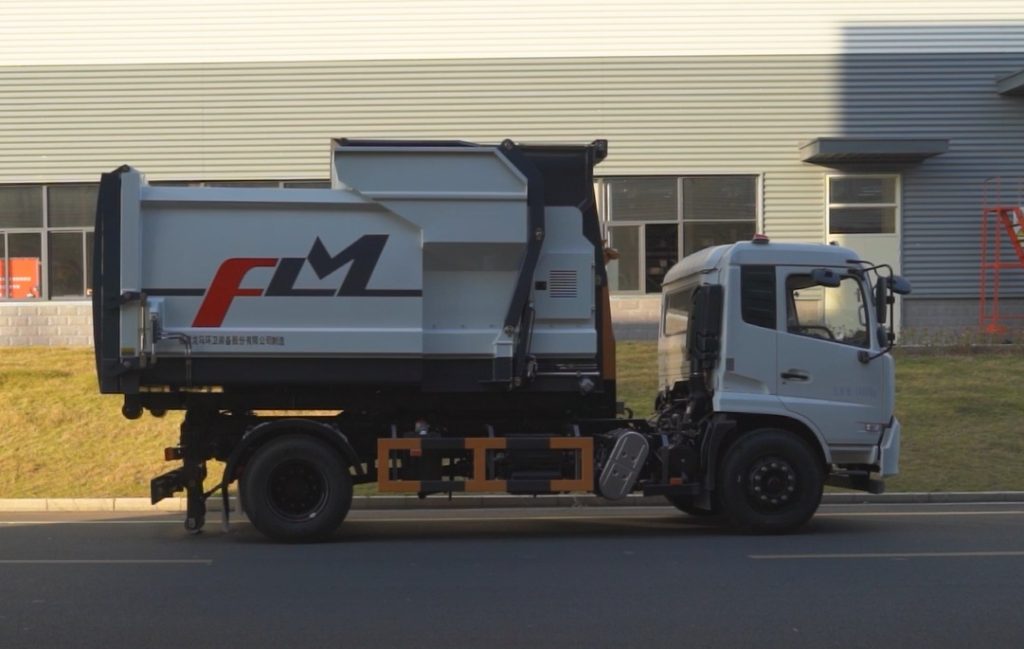
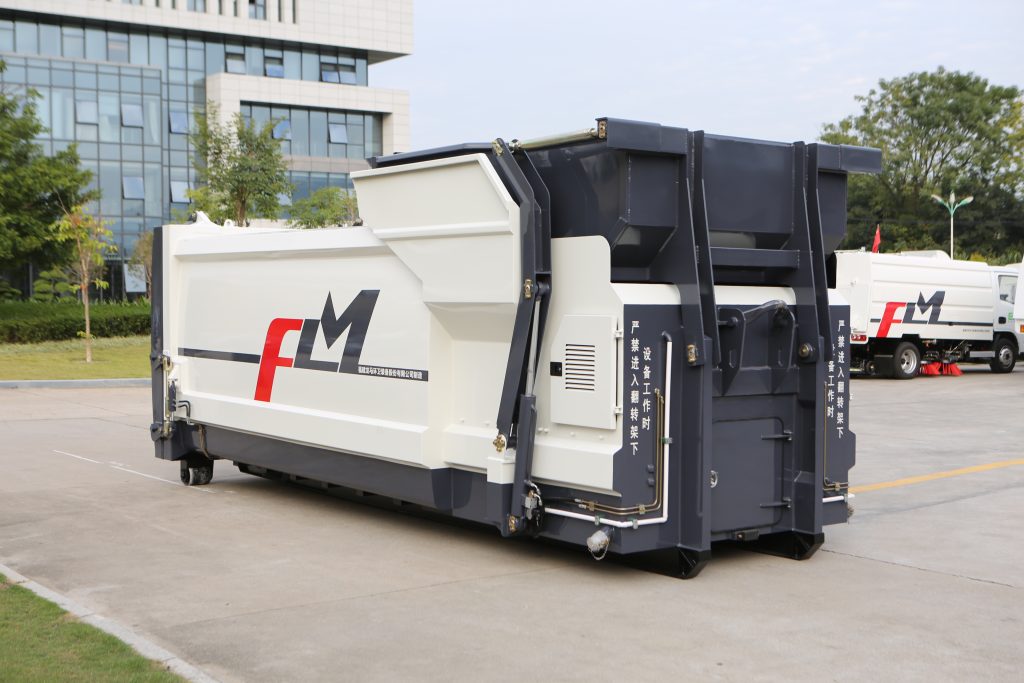
A movable refuse compactor combines a receiving area, compression chamber, storage box, sealing structure, and control system into one working unit. Waste enters the hopper, moves into the compression chamber, and is pushed into the box body, where loose material becomes denser and easier to store.
The FULONGMA movable refuse compactor series is designed around sealing, deodorizing, compressing, and storing. That combination is important because municipal waste is rarely dry or uniform. Mixed refuse may include food residue, packaging, dust, and wet material, so the equipment has to manage volume and containment together.
Compression that supports steady collection rhythms
Selected movable refuse compactors use a 1.3 m³ compression chamber, a 3:1 compression ratio, and a compression cycle time of no more than 35 seconds. In practical terms, the machine can keep accepting waste during active collection periods without turning every load into a long stop. The value of this speed is most visible during morning community cleanup or evening commercial waste peaks, when delays quickly create disorder around the site.
Because the compactor stores compressed waste inside the box, the surrounding area remains easier to manage. Instead of moving many loose-bin loads immediately, operators can consolidate waste into a sealed unit and coordinate transfer with the right vehicle at the right time.
Sealing and liquid control for cleaner surroundings
The details around sealing matter as much as the compression force. FULONGMA uses an independent sewage system and an adjustable rear door sealing system to reduce leakage risk during storage and movement. For sites near residential buildings, markets, or public roads, that containment helps prevent the familiar secondary pollution problems of odor, leachate marks, and dirty loading zones.
The box body uses high-strength wear-resistant steel plates and high-strength weather-resistant steel plates. This matters because the equipment faces impact, moisture, seasonal changes, and repeated loading cycles in daily municipal service.
Choices for Different Waste Transfer Scenarios
Compact community and neighborhood sites
The ZTX09 movable refuse compactor has a 9 m³ container volume, making it suitable for smaller collection points where land is limited and frequent, controlled transfer is preferred. Together with the ZTX12, ZTX16, and ZTX18, it gives planners a simple way to match container volume to site scale. In a residential community, a small market-side collection area, or a school campus service zone, the priority is often footprint discipline. The equipment must accept regular waste flow without overwhelming the site or blocking access routes.
Balanced mid-range transfer points
The ZTX12 movable refuse compactor is the balanced middle option. Its 12 m³ container volume suits communities, campus service zones, and smaller transfer points that have outgrown the 9 m³ class but do not yet need the larger footprint of the 16 m³ or 18 m³ models. It keeps the same sealed compression logic, so managers gain extra breathing room without changing the handling model.
Busier mixed-use areas
The ZTX16 movable refuse compactor is better for busier mixed-use areas where waste builds faster and the transfer window is less predictable. Its 16 m³ container volume gives planners a stronger buffer for peak days while keeping the same compact transfer logic and controlled loading environment.
High-load transfer points and busy urban routes
The ZTX18 movable refuse compactor provides an 18 m³ container volume, which suits busier sites where waste accumulates faster or transfer intervals need more breathing room. A larger box is useful near dense residential zones, commercial back-of-house areas, public service yards, or collection networks that receive refuse from multiple nearby points. The goal is to absorb peaks without letting loose waste pile up.
Since the compression cycle and compression ratio remain consistent, the ZTX18 does more than scale up capacity; it extends the storage window for demanding locations. This allows teams to manage heavier daily loads with fewer interruptions around the site.
For high-volume urban waste transfer, the ZTX18 movable refuse compactor gives planners a larger sealed holding capacity while preserving the same core compaction logic. It is a practical choice when the site has enough space for the equipment but still needs cleaner containment and orderly loading.
What to Look for Beyond Capacity
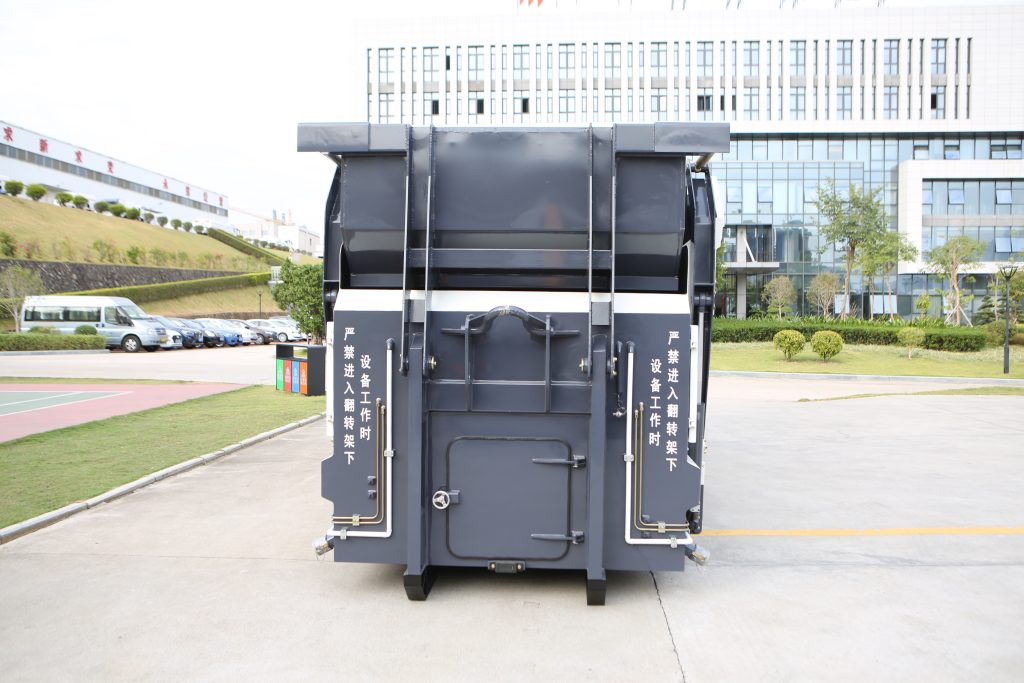
Capacity is easy to compare, but it should not be the only decision point. A refuse compactor works in public-facing conditions, so the equipment must also handle safety, operator visibility, liquid control, and long service hours.
FULONGMA integrates PLC microcomputer control with a text display that shows operation status, full-load indication, and system pressure. For daily teams, this kind of visibility reduces guesswork. Operators can see the equipment state directly instead of relying only on sound, habit, or manual checks.
Safety features also deserve attention. The system includes a power key lock, emergency stop button, swing arm cylinder safety device, and side feeding door safety device. These elements are especially relevant at community or transfer points where work areas may be compact and where disciplined operating procedures protect both staff and nearby site users.
Where FULONGMA Fits in Municipal Waste Management
FULONGMA is strongest in this topic when the discussion shifts from a single machine to a waste transfer workflow. The movable refuse compactor series gives planners a way to match site scale with a sealed, compact transfer solution instead of forcing every location into the same truck-first model.
In smaller locations, the ZTX09 supports neat, frequent waste consolidation. In heavier locations, the ZTX18 offers more storage capacity without abandoning the same compression and containment principles. Together, they show how movable refuse compactors can help cities build cleaner collection points across different neighborhoods.
Conclusion
A garbage compressor creates value by making waste transfer cleaner before the long-haul movement begins. When refuse is compressed, sealed, and stored in a controlled unit, sanitation teams can reduce exposed waste, manage leachate more responsibly, and keep collection sites easier to operate. FULONGMA strengthens that value by offering movable refuse compactor options for both compact neighborhood points and high-load urban transfer locations.
Contact us to see how cleaner compression and smarter site planning can improve municipal waste management.
FAQ
Q: What is a garbage compressor used for in urban waste transfer?
A: A garbage compressor reduces loose refuse volume before waste is moved to a larger transfer or disposal facility. In urban settings, it also helps keep collection points cleaner by sealing waste inside the equipment, controlling odor, and reducing the risk of leachate dripping around residential, commercial, or public service areas.
Q: Why is sealing important in a movable refuse compactor?
A: Sealing helps prevent secondary pollution, especially odor escape, waste scattering, and leachate leakage. FULONGMA movable refuse compactors use an independent sewage system and adjustable rear door sealing, which helps keep the surrounding site cleaner during storage, compression, and transfer operations.
Q: Is a movable refuse compactor only useful for large transfer stations?
A: No. Movable refuse compactors are also useful for smaller decentralized sites where land is limited, but waste still needs controlled handling. A compact model can support communities, markets, parks, or campus service areas, while a larger model can serve denser routes or busier urban collection hubs.