Challenges of conventional municipal solid waste collection using the traditional garbage truck
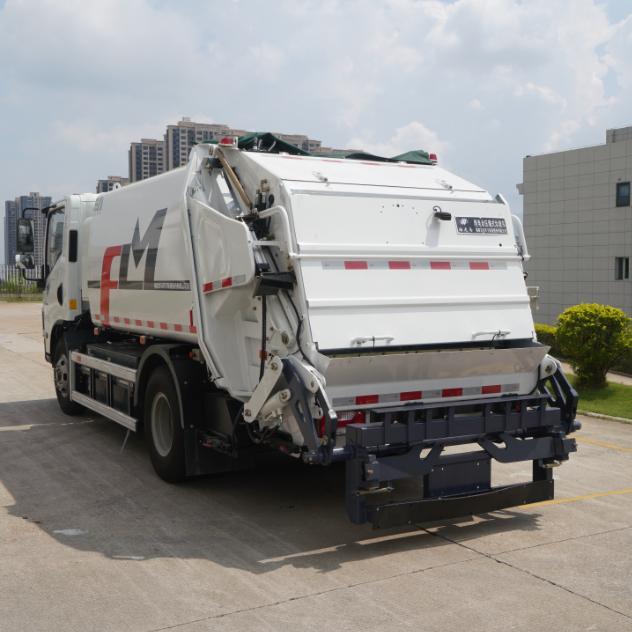
In modern urban environments, municipal solid waste management relies on the continuous operation of the standard garbage truck. However, the traditional paradigm of waste collection heavily relies on manual labor, which presents significant challenges for modern municipalities. Cities are transitioning to the electric self-loading garbage truck as an automated, whisper-quiet, and cost-effective solution to future-proof urban sanitation. Implementing a modern self-loading garbage truck eliminates manual physical collection, streamlines waste logistics, and provides long-term fleet sustainability.
What makes the traditional diesel garbage truck obsolete in urban environments
Standard internal combustion vehicles are increasingly ill-suited for modern urban infrastructure. A conventional diesel garbage truck operating on residential routes must constantly stop and start, which causes extremely low fuel efficiency and rapid mechanical wear. This operational pattern also generates substantial carbon emissions, particulate matter, and toxic exhaust in close proximity to homes. Furthermore, the loud engine noise and hydraulic hum of heavy diesel machinery disturb sleeping residents, especially during early morning or late-night collection shifts. As environmental regulations tighten and noise pollution limits become stricter, traditional combustion fleets fail to meet municipal standards.
Engineering the future of residential waste logistics with the self-loading garbage truck
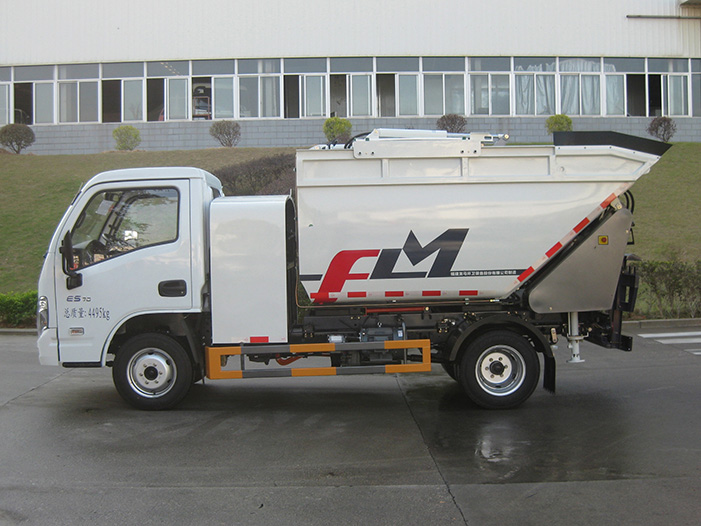
How advanced automation in the self-loading garbage truck redefines efficiency
To overcome labor shortages and operational inefficiencies, cities are adopting automated solutions. Integrating an automated bin lift mechanism on a self-loading garbage truck allows a single operator to complete the entire collection process from the safety of the cabin. This mechanized system utilizes hydraulic multi-way valves to lift, tilt, and empty standard 120L, 240L, and 660L dustbins effortlessly. The automated loading cycle takes less than 18 seconds, which dramatically speeds up stop-by-stop collection on residential routes. By eliminating the need for multi-man crews to lift bins manually, cities can optimize personnel allocation and reduce the physical demands placed on sanitation workers.
Technical deconstruction of the pure electric sanitation platform
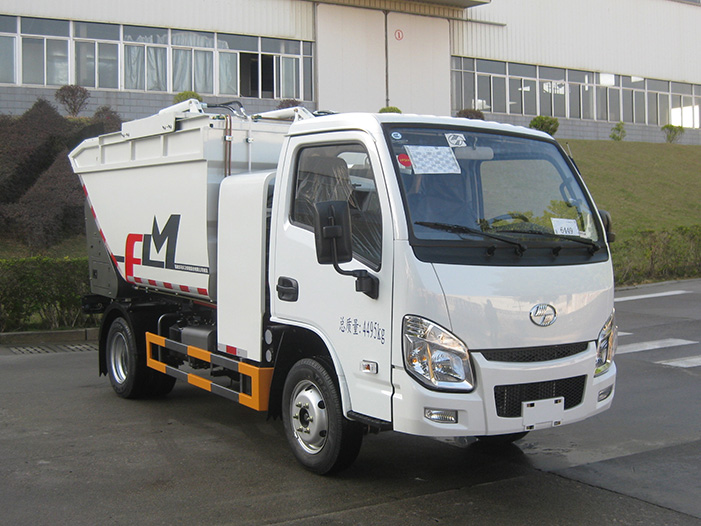
A prime example of this technological evolution is the FLM5040ZZZNJBEVH, a highly advanced vehicle developed by FULONGMA. This electric self-loading garbage truck is engineered on a SH1047PCEVNZ chassis, utilizing a high-safety CATL lithium iron phosphate battery (model L173TB1) with a capacity of 66.84 kWh. This battery system provides a reliable travel range of at least 276 kilometers, which is more than sufficient for a full day of urban collection. The chassis motor delivers a peak power of 75 kW and a rotating speed of 5000 r/min, ensuring excellent gradeability and smooth acceleration on city streets.
Furthermore, the vehicle features outstanding design details that maximize durability and prevent secondary pollution:
- The robust 4.1 cubic meter garbage tank can be constructed from premium stainless steel, ensuring a long, rust-free service life.
- A specialized feeding opening covering mechanism seals the top feeding port completely during transit, guaranteeing zero leakage of waste or odor.
- An optimized lifting device stows securely while driving, which reduces the rear overhang, increases the departure angle, and enhances maneuverability in tight spaces.
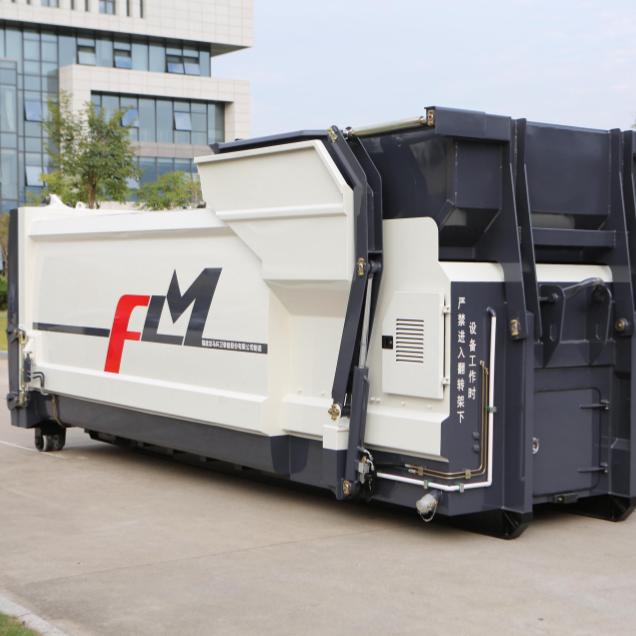
- The tank utilizes a tipping and self-unloading method, allowing the vehicle to dock directly with a large compression garbage truck for rapid waste transfer.
Economic and environmental benefits of the electric self-loading garbage truck
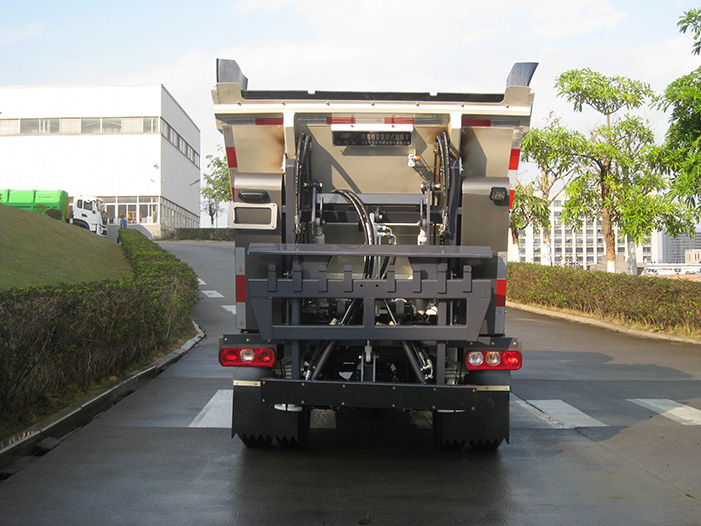
Why transitioning to the electric self-loading garbage truck slashes operating costs
Transitioning a municipal fleet to clean energy offers massive financial advantages. An electric self-loading garbage truck reduces energy consumption costs by up to 75 percent compared to conventional diesel vehicles. Electric drivetrains have significantly fewer moving parts than internal combustion engines, which slashes routine maintenance expenses, fluid replacements, and mechanical wear. To maximize the efficiency of each collection run, the vehicle utilizes a high-performance scraper mechanism. This mechanism regulates the deposited waste and compacts it tightly within the tank, greatly increasing the loading capacity per trip and reducing the number of necessary trips to disposal sites.
How the FULONGMA and Huawei partnership brings intelligence to city fleets
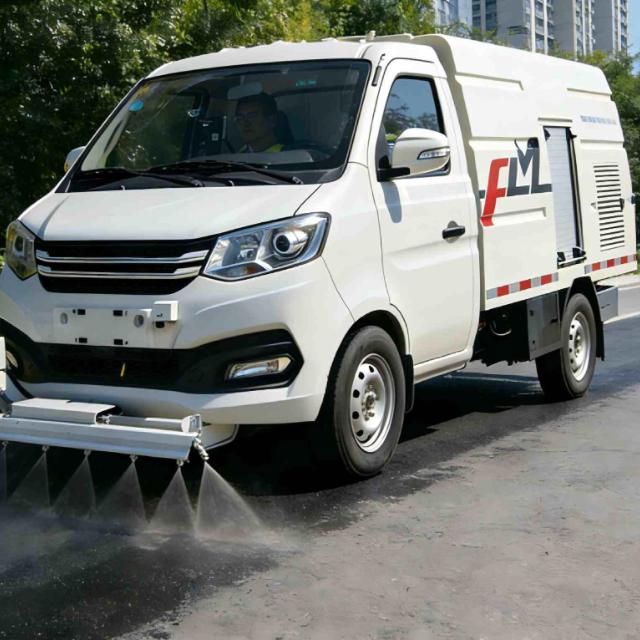
FULONGMA is the first sanitation partner in the HUAWEI Qiankun Ecosystem. The cooperation is currently proven on FULONGMA’s L4 unmanned sweep robots, the SD15 and SD22C, which integrate Huawei’s MDC driving controller, Octopus cloud service, Ascend AI compute, and Qiankun sensor suite. The same ecosystem is designed to extend to other sanitation vehicles, including electric self-loading garbage trucks, when fleet operators opt in.
This partnership elevates operations from single-vehicle intelligence to comprehensive scenario intelligence:
- Platform-level fleet management.Through the FULONGMA smart sanitation cloud platform, operators monitor bin status, vehicle battery, and route conditions in real time, and dispatch the closest available truck to each collection point.
- Connected-vehicle configuration.With onboard GPS and CAN bus telemetry, each truck streams live location and operating data to the operations center, giving dispatchers full visibility across the residential fleet.
- Predictive maintenance via platform analytics.By aggregating operating data across the fleet, the platform flags components trending toward failure, helping operators schedule service before a breakdown interrupts the route.
- AI-assisted route planning.The platform integrates traffic and service data so route plans can be adjusted dynamically, cutting non-productive mileage and keeping residential collections on schedule.
Conclusion
The global transition toward automated, electric municipal fleets is accelerating rapidly. Replacing an obsolete, loud diesel garbage truck with an advanced electric self-loading garbage truck allows cities to successfully overcome labor shortages, eliminate secondary pollution, and slash operational expenditures. Through high-performance engineering, advanced CATL battery integration, and smart route planning via the Huawei alliance, FULONGMA provides municipalities with a reliable, future-proof solution for sustainable urban sanitation. Ultimately, adopting a highly maneuverable self-loading garbage truck represents the most viable path toward a cleaner, more efficient urban environment.
To discover how these advanced sanitation solutions can optimize your city fleet, please contact us.
FAQs
Q: Can a small FULONGMA self-loading garbage truck dock with larger waste vehicles?
A: Yes. Compact vehicles like the FLM5040ZZZNJBEVH utilize a tipping and self-unloading dumping method with a garbage tank dumping angle of at least 42 degrees. This design allows the vehicle to dock flawlessly with large-scale compression garbage trucks for unloading, which significantly improves transfer efficiency and prevents loading pollution.
Q: What is the battery warranty for an electric self-loading garbage truck?
A: High-quality electric vehicles utilize premium battery systems designed for long-term municipal service. For instance, the CATL Lithium Iron Phosphate batteries integrated into the FULONGMA platform feature an outstanding 8-year or 400,000 km warranty, providing exceptional reliability and securing the municipal investment.
Q: How does a self-loading garbage truck prevent odor and liquid leakage during transportation?
A: Odor and liquid leakage are prevented by a sealed tank design. The vehicle features a specialized feeding opening covering mechanism at the top of the garbage tank. This mechanism completely seals the feeding and unloading ports during transit, ensuring zero leakage of waste or leachate and preventing secondary environmental pollution.
Q: Can a FULONGMA garbage truck operate in narrow residential alleys and low-clearance areas?
A: Yes. With compact external dimensions, such as a width of 1740 mm and a total height of 2315 mm, the vehicle is highly maneuverable. The unique lifting mechanism can be stowed while driving to reduce rear overhang and increase the departure angle, allowing the vehicle to easily navigate tight corners and narrow streets.