Navigating Municipal Fleet Electrification: The 5-Year TCO Horizon
Urban waste management departments are under increasing pressure to shift from using conventional diesel-powered refuse trucks to clean energy options, while still being financially responsible. A detailed comparative analysis of diesel versus electric garbage trucks over five years gives urban officials the financial insight they require to assess the viability of fleet electrification and investment returns. It is important to understand the lifecycle cost of the refuse collection vehicle.
Beyond the Initial Sticker Price
Whereas diesel trucks have always been dominant in municipal fleets, the battery-powered refuse collectors provide substantial savings that change the long-term capital planning perspective.
- Financial Analysis: Correct calculations of the total cost of ownership garbage truck change the municipal perspective from the initial acquisition cost to the 5-year performance cycle, providing a consistent basis for the electric garbage truck TCO analysis.
- Operating Reality: The heavy stop-and-go route increases the fuel consumption of diesel refuse trucks and operating costs of diesel garbage trucks, while the electric garbage compactor truck performs well in the heavy stop-and-go municipal collection routes.
- Strategic Target: The municipal electric garbage truck ROI is extremely attractive due to the lower energy cost, less maintenance, and regenerative braking savings compensating for the initial procurement costs.
FULONGMA Clean Energy Sanitation Solutions
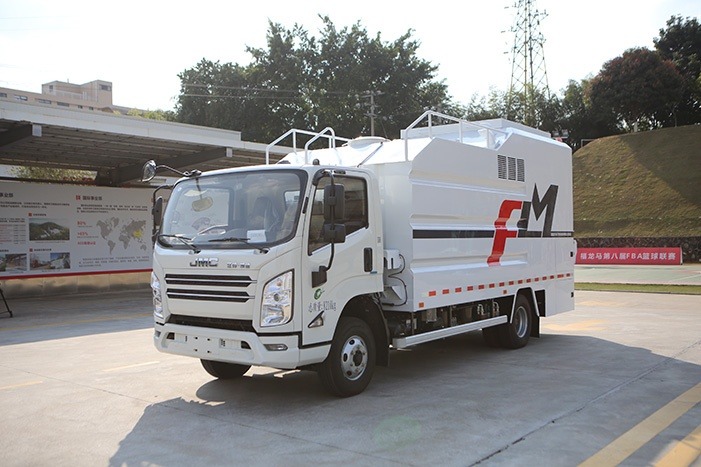
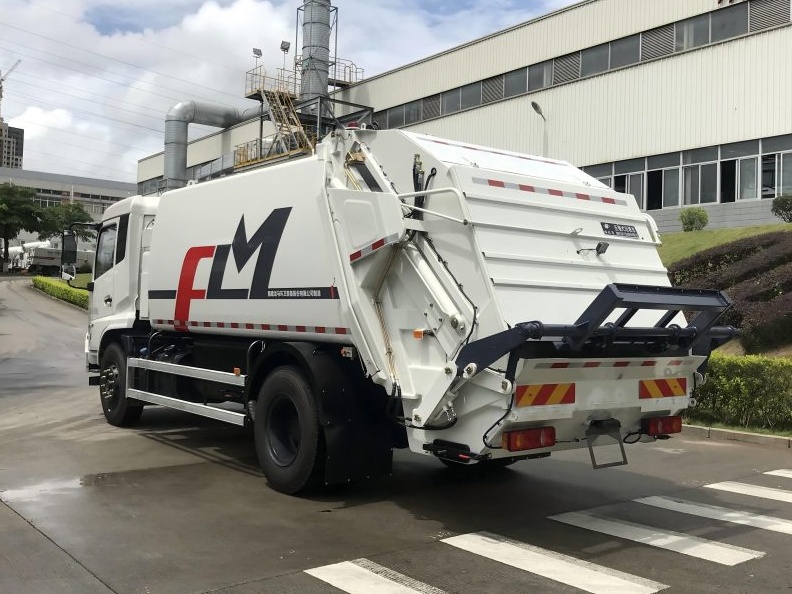
As a leading global player in the field of environmental sanitation, FULONGMA presents state-of-the-art municipal equipment specially designed for zero-emission city operations.
- Core Identity: The company’s core businesses include equipment manufacturing, sanitation services, and waste disposal solutions.
- Equipment: FULONGMA produces the following equipment types: Garbage Transfer Series, EV Power Series, Road Cleaning Series, and Waste Disposal Equipment.
- Technical Expertise: Equipped with a national postdoctoral research station as well as provincial R&D centers, FULONGMA offers optimum pure electric refuse vehicle solutions.
Financial Breakdown: Electric vs. Diesel Refuse Truck Operating Costs
In the context of assessing the operational life cycle of five years, an analysis of expenses must be done concerning energy consumption, maintenance costs, and repair frequency. The calculation of the cost of an electric garbage truck provides municipal administrations with an idea of the benefits of using an electric vehicle as opposed to a diesel one.
Energy Efficiency and Fuel vs. Charging Expense
The main financial benefit in the electric garbage truck operating cost analysis comes from the huge difference in terms of efficiency between an internal combustion engine and electric powertrain.
- Cost of Fuel Comparison: The operating cost of a diesel garbage truck is significantly affected by engine idling, hydraulic power take-off (PTO) loads, and rising fuel costs.
- Battery Charging Efficiency: The operating cost of an electric garbage truck benefits from efficient battery power management and good overnight off-peak city charging rates.
- Kinetic Energy Recovery: The state-of-the-art regenerative braking technology converts kinetic energy into electrical energy through frequent braking, thus charging the battery pack at reduced charging cost.
Maintenance Savings and Component Durability
Simplified design of the mechanics of the automobile system ensures less workshop service and fewer instances of unscheduled breakdowns.
- Drive Train Simplicity: The absence of internal combustion engines, gearboxes, exhaust treatment systems (DEF/DPF), and belt drives ensures that there will be less frequent maintenance for electric garbage trucks.
- Less Brake Friction: Regenerative brakes perform most braking tasks, decreasing physical wear on the braking systems up to three times.
- Battery Longevity: Reliable design of the cells and heat control mechanisms helps maintain stable operation of the battery pack for many years to come.
Technical Superiority and Practical Application: The FULONGMA FLM5180ZYSDFBEVK
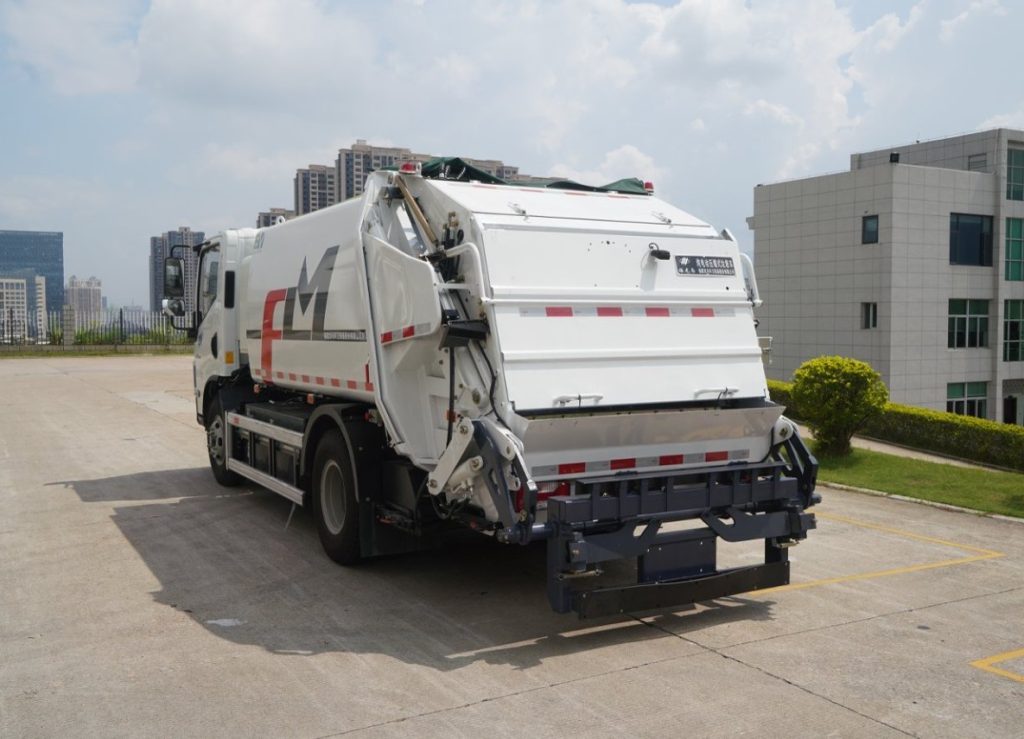
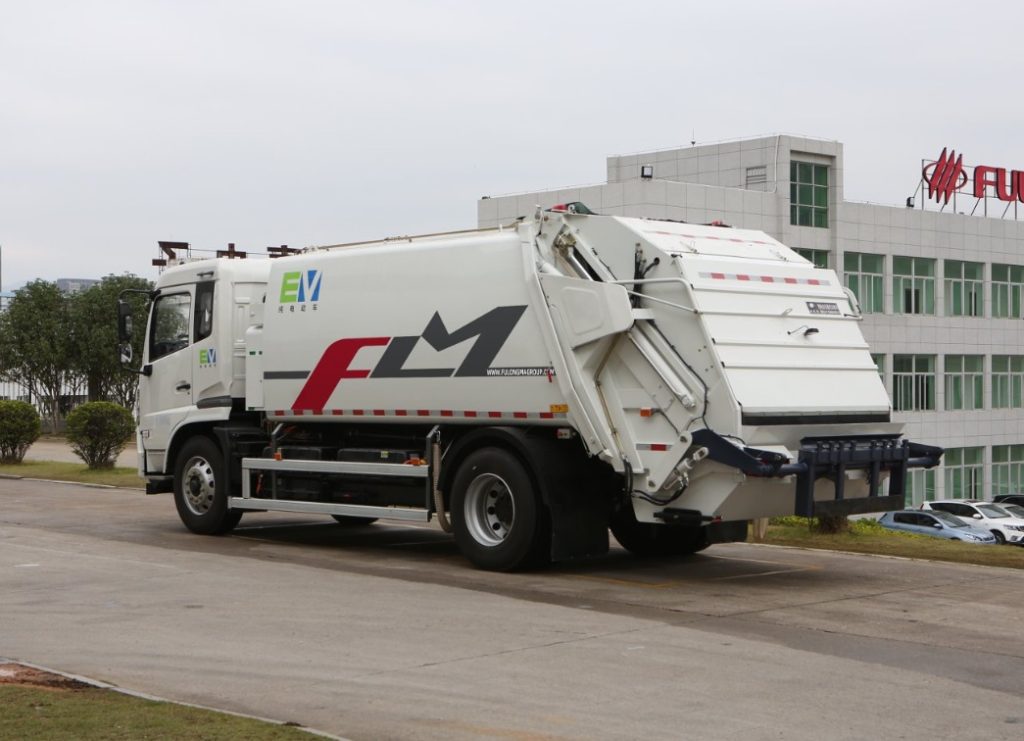
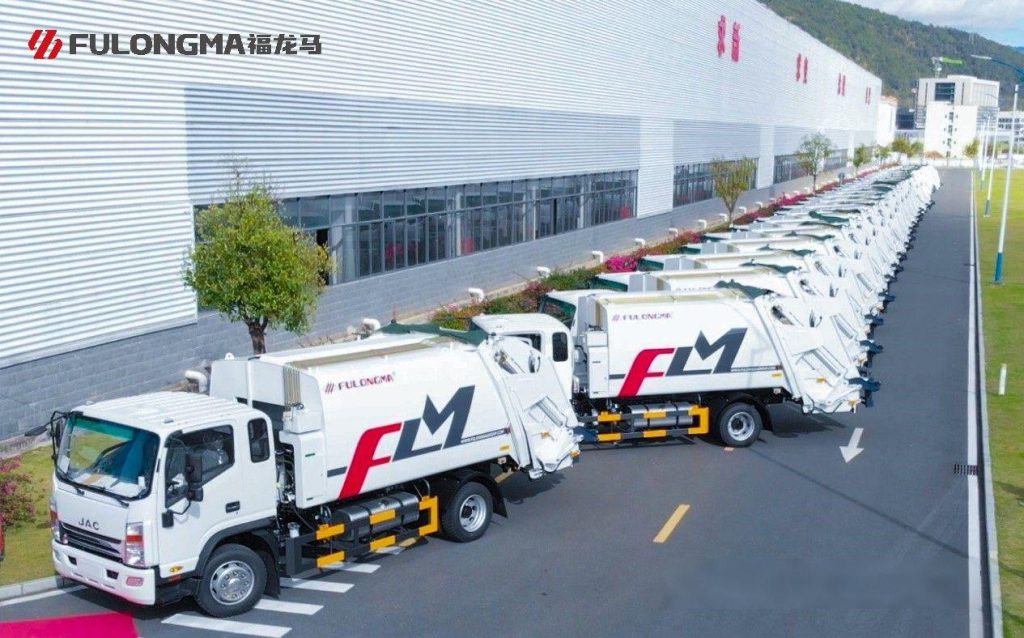
The marriage of heavy-duty design with battery-electric propulsion makes the modern electric garbage compactor truck capable of handling tough municipal routes effectively. The FULONGMA refuse truck is a high-performance battery-electric garbage compactor truck.
Structural Innovation and High-Efficiency Compaction
The FULONGMA FLM5180ZYSDFBEVK uses advanced mechanical engineering principles combined with high-capacity pure electrical functions to overcome urban waste transfer problems.
- High Capacity: With its 12.5 m³ refuse container, 1030L sewage tank, and 18,000 kg GVW chassis, the FLM5180ZYSDFBEVK maximizes the efficiency of daily garbage transportation.
- High Resistance Design: Built with high-strength, weather-resistant steel plates in an arched design and featuring a U-shaped integrally formed truss-slot push plate guide rail, the body delivers a compaction density of 0.65–8 t/m³ while maintaining structural integrity and resisting deformation under heavy loads.
- Anti-Leakage: With a heterogeneous double-compartment anti-leakage mechanism and special tailgate rubber seals, liquid waste is retained inside the tank, and there will be no leachate leakage.
Practical Municipal Duty Cycles and Operational Scenarios
Deploying pure electric compactor fleets transforms daily sanitation routines across diverse urban environments.
- Low-Noise Collection: Zero tailpipe emissions and quiet motor operation allow early morning or late-night refuse collection in residential communities, civic zones, and educational campuses.
- High Maneuverability: A compact chassis layout easily navigates tight municipal roadways, urban-rural junctions, bridges, commercial centers, and port facilities.
- User-Friendly Operation: In-cab touchscreen controls and out-cab controllers enable seamless operation across automatic and manual compression cycles, enhancing crew safety and comfort.
Strategic Roadmap for Municipal Garbage Truck Fleet Electrification
To effectively manage the transition process, there is a need for proper capital planning, charging infrastructure planning, and comprehensive service provision. Knowledge of the cost of garbage truck fleet electrification would be helpful in planning the transition process.
Infrastructure Planning and Battery Lifecycle Management
Overcoming Cost Barriers for First Garbage Truck Fleet Electrification Requires Battery Health and Integration of Charging Infrastructure to Be Considered.
- Charging Stations in Depots: Installation of fast-charging stations for garbage trucks in municipal depots suits the normal off-duty parking periods of the vehicles quite well.
- Battery Health: Advanced battery management technology ensures a constant optimum cell temperature of the batteries, ensuring longevity and reducing any future ownership risk.
- Return on Investment: Thorough analysis of the total cost of ownership of electric garbage trucks demonstrates a quick recovery period of 3 to 4 years.
Global Service and Technical Support Framework
The wide-ranging manufacturer servicing networks ensure maximum uptime and future peace of mind for fleets.
- Lifecycle Support Service: The FULONGMA company provides comprehensive technical assistance ranging from initial fleet planning to technical support after the sales phase.
- Maintenance Assistance: Technicians trained at the factory level, along with periodic inspections will make sure that battery-operated refuse truck fleets remain highly operable.
- Support Network Across the Globe: The globally spread service stations located in more than 35 countries provide localized spare parts services.
Accelerate Your Municipal Transition
Partnering with experienced equipment manufacturers enables municipal leaders to achieve zero-emission sustainability targets while maximizing long-term ROI.
Partner with FULONGMA for Fleet Electrification
Revolutionize your municipal waste collection vehicle fleet with superior clean energy sanitation trucks from FULONGMA.
- Financial Model: Reach out to FULONGMA experts regarding a custom electric versus diesel garbage truck total cost of ownership analysis for your city.
- Product Inquiry: Browse our full range of EV Power Series models and take a virtual tour of our cutting-edge manufacturing facility.
- Contact Us Directly: Reach out to FULONGMA global distributorsto start your municipal fleet electrification process.
FAQ
Q: How does the 5-year total cost of ownership of an electric garbage truck compare to that of a traditional diesel truck?
A: Although an electric garbage compactor truck costs more upfront, with 60-70% lower energy costs and 40-50% lower maintenance costs, the truck reaches full cost recovery in 3-4 years. It makes the economics of using an electric refuse truck increasingly favorable for municipalities.
Q: Can a battery-powered garbage truck complete the entire municipal collection cycle?
A: Yes, FULONGMA’s electric refuse truck lineup offers battery capacities ranging from 160 kWh to 314 kWh, which has enough power to operate for regular municipal collection shifts of 8-10 hours.
Q: How does regenerative braking affect the electric garbage truck’s return on investment?
A: By converting the kinetic energy created in the stop-and-go process of collecting into electrical energy, regenerative braking increases the vehicle’s mileage and saves on costly brake repairs.
Q: What kind of maintenance do electric garbage compactor trucks require in terms of the hydraulic system?
A: The hydraulic system needs regular fluid checks and seal inspections; however, compared to the diesel PTO system, direct-drive electric motors place less stress on the pump.