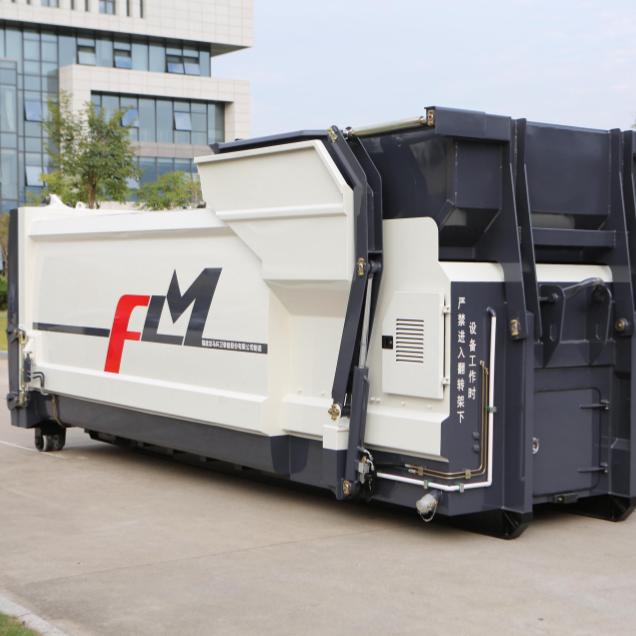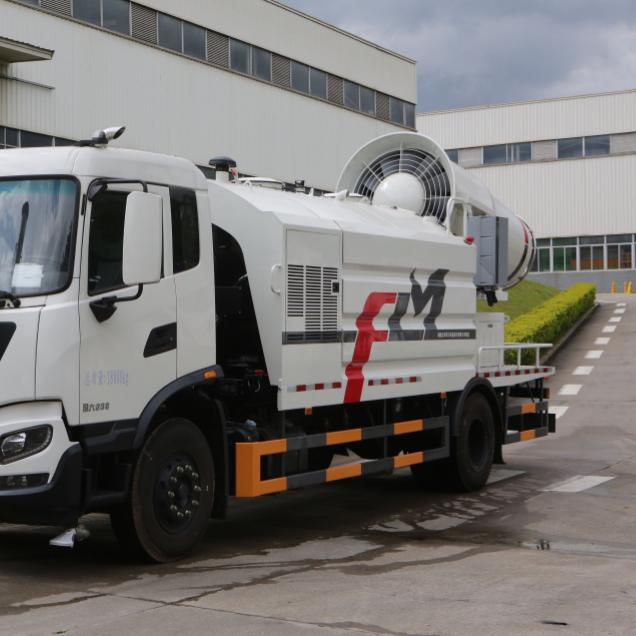
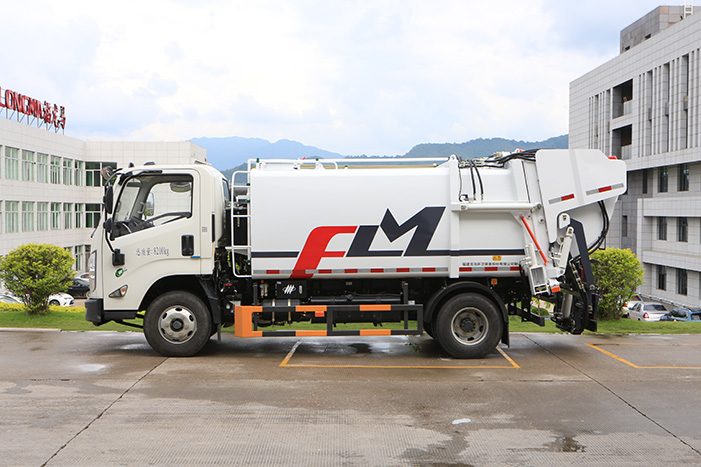
A food waste collection truck improves hygiene and route efficiency by keeping wet waste enclosed, collecting excess liquid in a dedicated system, and moving standard bins through a more controlled loading cycle. For urban communities, hotels, canteens, and hospitals, the FULONGMA FLM5080TCAJL6H combines a sealed body, Pendulum-Type Compaction, bin lifting, leachate collection, and practical cleaning support in one route-ready vehicle.
Food waste is heavier, wetter, and more likely to release liquid during transport than many dry municipal waste streams. The vehicle therefore needs more than a large tank: it needs a collection process that limits exposure at the pickup point, keeps the load contained between stops, and gives operators a dependable way to unload and clean the equipment.
Why Food Waste Needs a Dedicated Collection Truck
Kitchen waste can contain moisture, food residue, and loose material that shifts as the truck accelerates, turns, or climbs. If the body, feeding opening, and tailgate are not designed to work together, liquid can escape onto the road and residue can accumulate around the loading area. That creates extra cleaning work and can make collection points unpleasant for residents and staff.
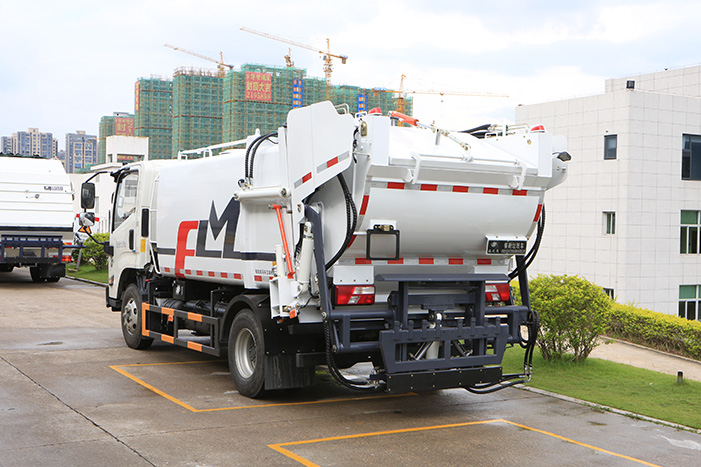
A wet waste collection truck is built around this operating reality. The FULONGMA configuration forms a fully enclosed cavity through rubber-strip sealing at the tank body, tailgate, feeding opening cover, and tailgate feeding port. This enclosed arrangement is especially relevant for high-moisture kitchen waste moving from residential communities, food-service sites, and institutional kitchens to a disposal or transfer point.
How the FLM5080TCAJL6H Controls Hygiene on the Route
Sealed Transport Limits Exposure
Sealing matters throughout the shift, not only when the truck is parked. During collection, the body receives waste through a defined opening; during transport, the enclosed cavity helps keep the load inside the tank and reduces direct contact between wet waste and the surrounding road environment. This supports a cleaner route, particularly where trucks pass through busy urban streets or residential areas.
The tank body uses high-strength manganese steel, with stainless steel available as an option. For a food waste operation, the material decision should be connected to the cleaning routine, expected moisture exposure, and the level of durability required by the service schedule rather than treated as a cosmetic choice.
Liquid Management Makes the Collection Cycle More Complete
Wet waste handling is not finished when the solid material enters the tank. The truck includes leachate collection, discharge, and flushing devices that can initially separate solid and liquid material, collect excess leachate, and discharge it in a unified manner. The clean-water tank and flushing arrangement also give the operator a practical way to manage residue after collection work.
The official configuration lists a leachate tank volume of 0.25 m³ and a clean-water tank volume of 0.17 m³. These figures should be read as part of the vehicle’s operating system: the tank, sealing points, discharge route, and wash-down method all affect how well a crew can control liquid during a full day of work.
A More Controlled Loading Workflow
Bin Lifting Reduces Manual Handling
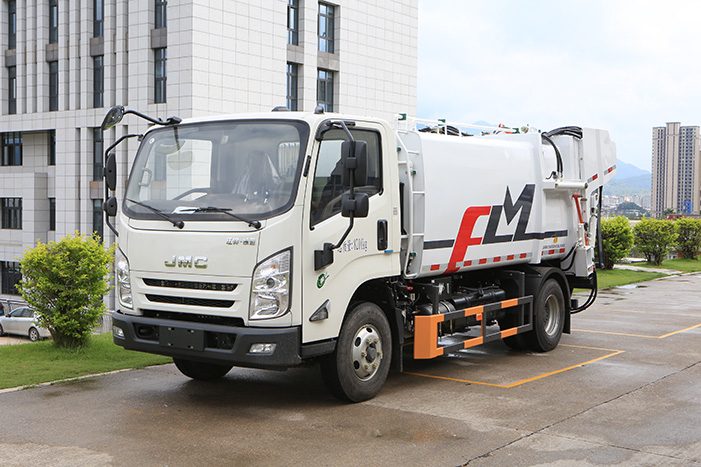
The new-style bin lifting mechanism moves the bin vertically up and down, helping reduce spillage during the lift. It can raise two 120L or 240L bins at the same time, while lifting mechanisms for 120L, 240L, and 660L bins are available as options. This gives route planners a direct connection between the truck and the container sizes used at the service site.
That compatibility is useful for residential collection, hotels, canteens, and hospitals where bins may be staged at different points and staff need a repeatable pickup movement. Before deployment, operators should confirm bin geometry, placement space, and the sequence used to approach, lift, empty, and return each container.
Pendulum-Type Compaction Helps Use the Body Efficiently
The tailgate contains a pendulum-type compression mechanism. It scrapes waste away from the feeding port, helps prevent accumulation in that area, and presses material into the tank so the load can climb and fill more effectively. This is different from treating the body as a passive container: the loading mechanism actively manages how wet waste is distributed during collection.
The official specification gives a refuse container capacity of at least 6.5 m³, a compression force of 96 kN, a compression cycle time of no more than 18 seconds, and discharge cycle time of no more than 60 seconds. These details help fleet teams think about stop rhythm and disposal access together, rather than judging efficiency from tank volume alone.
Route Fit for Urban and Institutional Waste Collection
The FLM5080TCAJL6H uses a JX1083TG26 chassis, has a gross vehicle weight of 8,200 kg, and measures 6,430 × 2,200 × 2,530 mm. Its 6.5 m³ or larger tank is suited to operations that need a meaningful collection load while still working within urban access constraints. The right route decision depends on road width, bin locations, traffic conditions, disposal distance, and the daily volume of wet waste.
For communities, the priority may be clean bin handling and predictable movement between closely spaced stops. For hotels and canteens, the collection plan may need to align with meal periods, service entrances, wash-down areas, and the timing of downstream treatment. Hospitals and other institutions may place greater emphasis on separation, controlled access, and keeping the collection process orderly around occupied facilities.
Configuration Choices That Matter in Daily Operation
The vehicle can be specified with options that address different route conditions. A leachate tank heating device uses an independent fuel liquid heater and circulating coolant to help avoid freezing in low-temperature operation. This option becomes relevant when winter service, exposed parking, and the condition of the leachate tank or tank bottom create a real operating risk.
Other available choices include a weighing system for the lifting mechanism, automatic ejector discharge, and a screw discharge device. These features should be selected according to how the waste stream is supervised, where discharge takes place, how much manual intervention is acceptable, and whether the operating authority needs more structured records during collection and disposal.
Small details also affect route readiness. Night work lights extend the usable operating window, the tailgate safety brace supports maintenance when the tailgate is open, and the vehicle-mounted hydraulic cleaning device can wash the truck, the service site, and nearby areas. A well-matched configuration turns hygiene from an end-of-day task into part of the collection workflow.
Why FULONGMA Is a Practical Choice for Wet Waste Routes
To explore the full FLM5080TCAJL6H configuration and available options, visit the FULONGMA Food Waste Collection Truck product. When planning your operation, match the truck’s specifications against your daily volume, bin sizes, discharge requirements, and seasonal conditions to ensure the right fit.
Conclusion
A food waste collection truck delivers its greatest value when hygiene, loading, liquid control, and route timing are planned as one system. The FULONGMA FLM5080TCAJL6H supports that approach with an enclosed high-moisture waste body, leachate collection and flushing devices, vertical bin lifting, Pendulum-Type Compaction, and options that respond to winter operation, weighing, discharge, and cleaning needs.
To discuss a route-specific sanitation configuration, contact FULONGMA with the bin sizes, collection points, waste volume, discharge location, and seasonal conditions that shape the service.
FAQ
Q: What is a food waste collection truck used for?
A: It is used to collect and transport high-moisture kitchen or wet waste from locations such as residential communities, hotels, canteens, hospitals, and other institutional sites. Its enclosed body, liquid-control system, bin lifting equipment, and discharge method are designed around the handling challenges created by wet, heavy, and potentially leaky waste.
Q: How does the FLM5080TCAJL6H reduce liquid leakage?
A: The truck uses sealed interfaces around the tank body, tailgate, feeding opening cover, and tailgate feeding port to form an enclosed cavity. It also includes leachate collection, discharge, and flushing devices, allowing excess liquid to be collected and managed through a defined process instead of spreading around the loading or transport route.
Q: Which bins can the FULONGMA wet waste collection truck lift?
A: The lifting system can raise two 120L or 240L bins at the same time. Optional lifting mechanisms are available for 120L, 240L, and 660L standard bins. The final selection should match the container dimensions, placement conditions, loaded weight, and pickup sequence used on the intended route.
Q: What should operators consider before selecting this truck?
A: Operators should review waste moisture, daily volume, bin sizes, route width, discharge access, wash-down arrangements, winter temperatures, and the need for weighing or automatic discharge. The tank, lifting system, liquid-control equipment, and cleaning method should be evaluated together so the vehicle fits the complete service cycle.