An electric garbage compactor truck is most effective when its range, container volume, compaction system, sealing design, and safety controls match the real collection route. For dense urban routes, FULONGMA gives planners a compact battery-electric option, which is designed for routes where frequent stops, bin lifting, contained waste handling, and return-to-base reliability matter more than simply choosing the largest truck body available.
How the Electric Garbage Compactor Truck Fits Urban Routes
Route distance and operating reserve
A useful route plan begins with the complete duty cycle: depot departure, collection loops, unloading travel, detours, charging windows, and the return leg. This is why electric garbage compactor truck selection should not rely on range alone. A shorter but high-stop route may consume energy differently from a longer route with steadier driving, because every lift, compaction cycle, reverse maneuver, and idle period changes the work profile.
Container volume and route rhythm
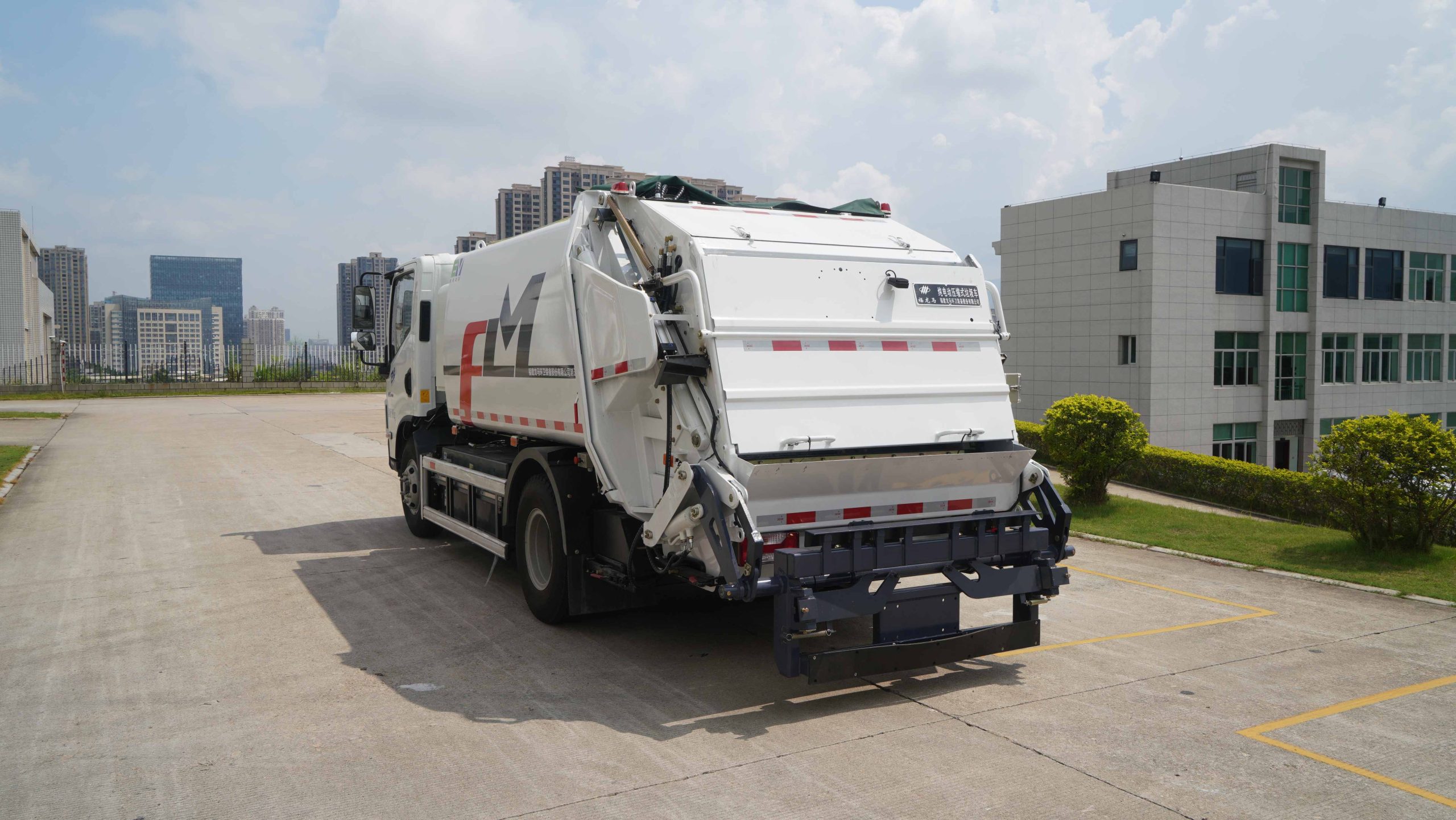
In neighborhoods with narrow roads, frequent roadside parking, gated communities, campuses, or busy market streets, vehicle dimensions directly affect route accessibility and maneuverability. With a 6.5 m³ waste container, the FLM5080ZYSDGBEV is better suited to compact municipal collection routes where crews need to make frequent stops and operate in areas with limited space.
However, choosing a compactor truck should not be based on route size alone. The more practical approach is to consider daily waste volume, collection frequency, transfer distance, disposal schedules, and access conditions together. When these factors favor a compact vehicle, a rear-loading electric garbage compactor truck can provide a better balance of capacity, maneuverability, and route efficiency.
How Compaction Supports Daily Collection
Two-way compression in repeated stop work
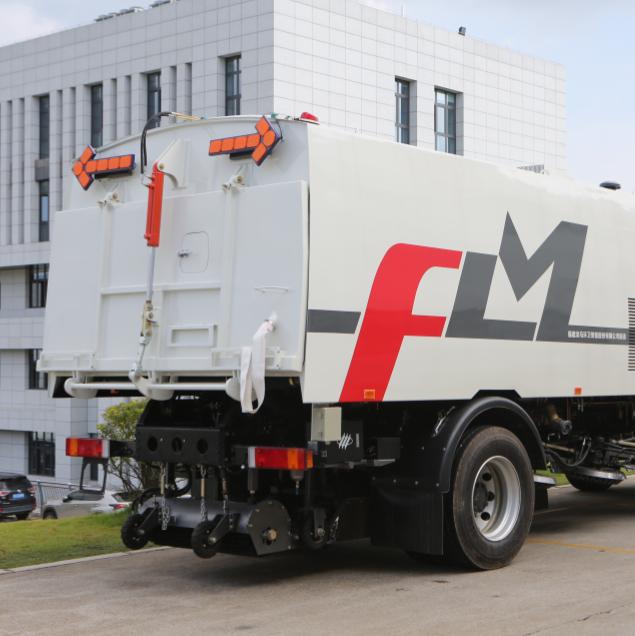
A rear-loading garbage compactor truck must handle waste in many small loading events rather than one clean bulk transfer. The FLM5080ZYSDGBEV uses two-way compression, helping the truck make better use of its container space as refuse accumulates across the route.
Its compression, unloading, and lifting cycle times are 13 seconds, 40 seconds, and 10 seconds or less. These figures are useful for understanding workflow, but real shift productivity still depends on crew coordination, bin positioning, traffic conditions, and how consistently the loading area can be accessed.
Sealing and sewage control
Containment is a practical concern in urban waste collection. A sealed loading and storage system helps reduce the risk of exposed refuse or liquid leakage when the truck moves through residential streets, commercial districts, and mixed-use areas.
The FLM5080ZYSDGBEV includes a 480L sewage tank. That capacity should be evaluated alongside the moisture profile of the route’s waste, cleaning routines, collection duration, and the location of approved discharge facilities.
Where a FULONGMA Electric Garbage Compactor Truck Makes the Most Sense
Compact streets and frequent stops
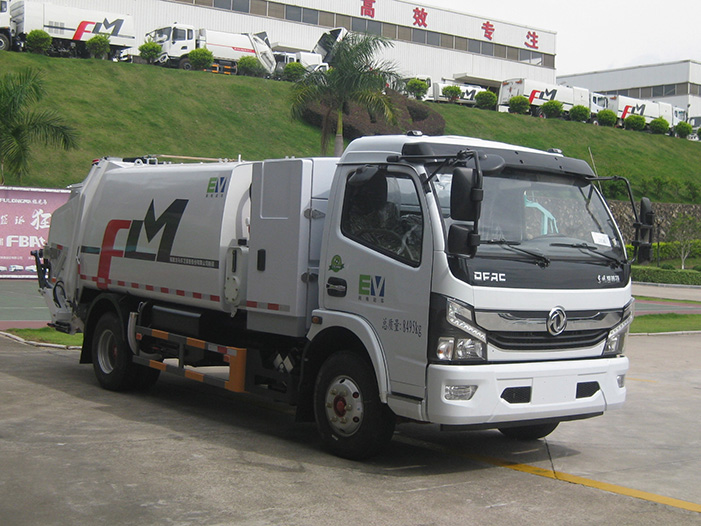
The FLM5080ZYSDGBEV is especially relevant when collection work is defined by access rather than long-distance hauling. Dense residential roads, smaller service entrances, school or campus environments, and community collection points often need a vehicle that can move steadily without demanding excessive turning space.
Its 162.28 kWh lithium iron phosphate battery and 490 km listed range provide the planning foundation, while the 6.5 m3 body helps keep the vehicle aligned with tighter route geometry. In this context, the truck is not being selected because it is the biggest option; it is being matched to the real shape of the route.
Municipal operation and daily checks
Urban waste collection involves repeated stopping, reversing, bin lifting, compaction, and unloading, so the operator’s control environment matters. Automatic operation can simplify routine cycles, while manual control remains useful when crews work around parked vehicles, uneven loading points, or unusual bin placement.
Before daily service, teams should check the rear loading area, sealing surfaces, visible hydraulic lines, emergency controls, interlocks, lighting, lifting interface, and sewage collection path. These checks help the electric garbage compactor truck perform consistently without turning basic route work into avoidable downtime.
Choosing Around the Route, Not the Specification Sheet
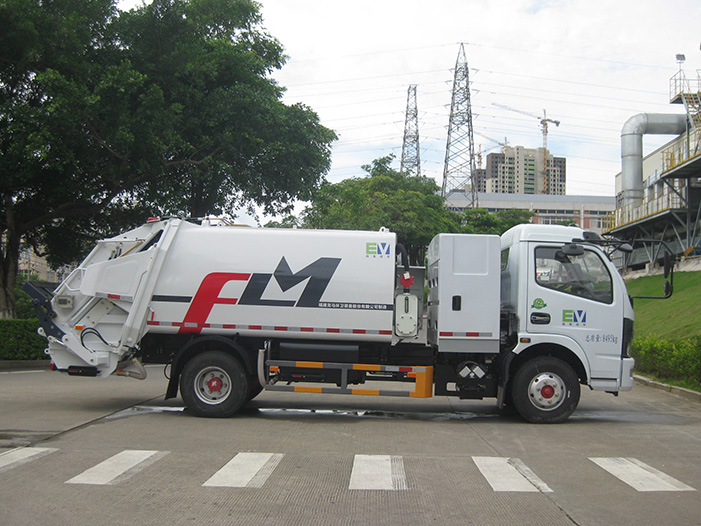
A single model can still support several route types when planners understand the operating pattern. The FLM5080ZYSDGBEV may suit short high-density loops, controlled community collection, or municipal routes where disposal trips are predictable and street access is the limiting factor.
For FULONGMA, the strongest message is route fit. The FLM5080ZYSDGBEV brings together battery-electric drive, a compact refuse body, two-way compression, sewage containment, and rear-loading operation in a way that makes sense for practical urban collection rather than abstract product comparison.
Conclusion
An electric garbage compactor truck creates value when its range, compaction behavior, container volume, sealing, and controls are treated as one route system. The FLM5080ZYSDGBEV is best understood as a compact battery-electric collection vehicle for urban routes where access, frequent stops, containment, and predictable daily workflow matter.
Ready to optimize your waste collection fleet? Contact FULONGMA to discuss a suitable electric garbage compactor truck based on your route distance, waste volume, bin handling requirements, and collection frequency.
FAQ
Q: What type of route suits FULONGMA electric garbage compactor truck?
A: The FLM5080ZYSDGBEV suits urban collection routes where access, frequent stops, and controlled rear loading matter. The 6.5 m3 container and compact route profile make it relevant for residential streets, campuses, community points, and municipal loops where oversized bodies may reduce maneuverability.
Q: Why does two-way compression matter in waste collection?
A: Two-way compression helps the truck use container space more effectively during repeated loading. It can support steadier collection across many stops, but productivity also depends on bin placement, crew routine, traffic, unloading distance, and how consistently the rear loading zone is accessed.
Q: What containment details should buyers consider?
A: Containment involves more than the main refuse body. Planners should consider sealing, sewage collection, cleaning routines, and how wet the route’s waste stream tends to be. The FLM5080ZYSDGBEV includes a 480 L sewage tank, which should be matched to local route conditions.