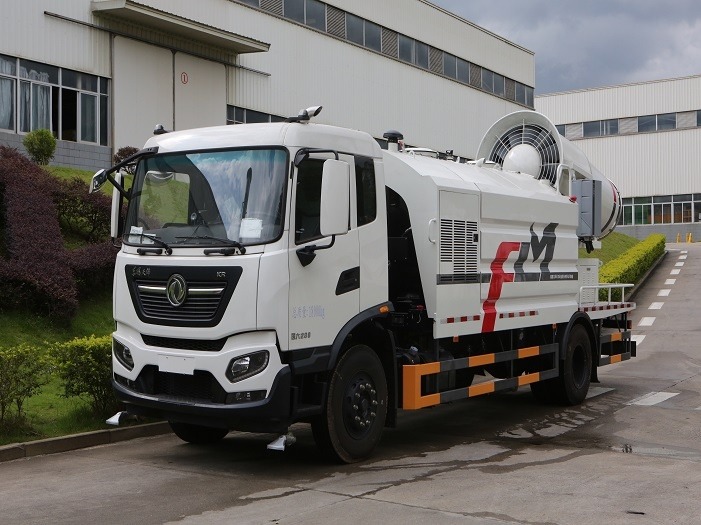
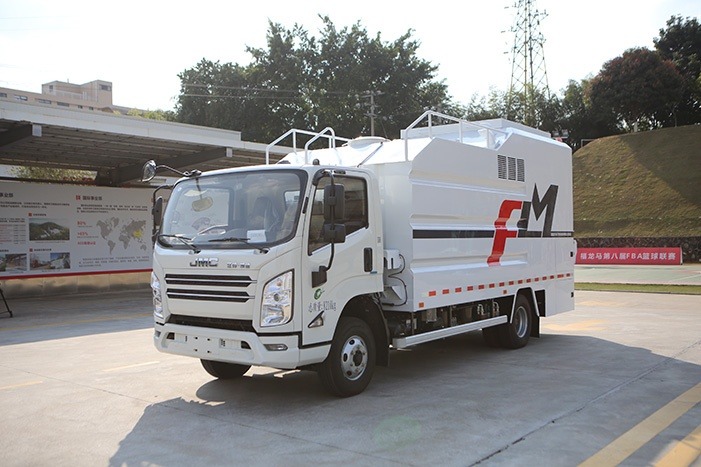
A trash bin cleaning truck washes empty bins in a dedicated compartment, using onboard water and a separate tank for wastewater. FULONGMA’s FLM5080TQXJL6 combines high-pressure flushing with rolling brushes and handles standard 120 L and 240 L plastic bins. At the rear, a lifting assembly takes the containers into the washing position.
An empty bin is the starting point, not the end of the sanitation job. Once collection is over, there is still the container to clean and the wash water to deal with. Looking at both together gives bin washing its proper place in a cleaning schedule.
How a Trash Bin Cleaning Truck Handles the Wash Cycle
Positioning and Lifting Standard Bins
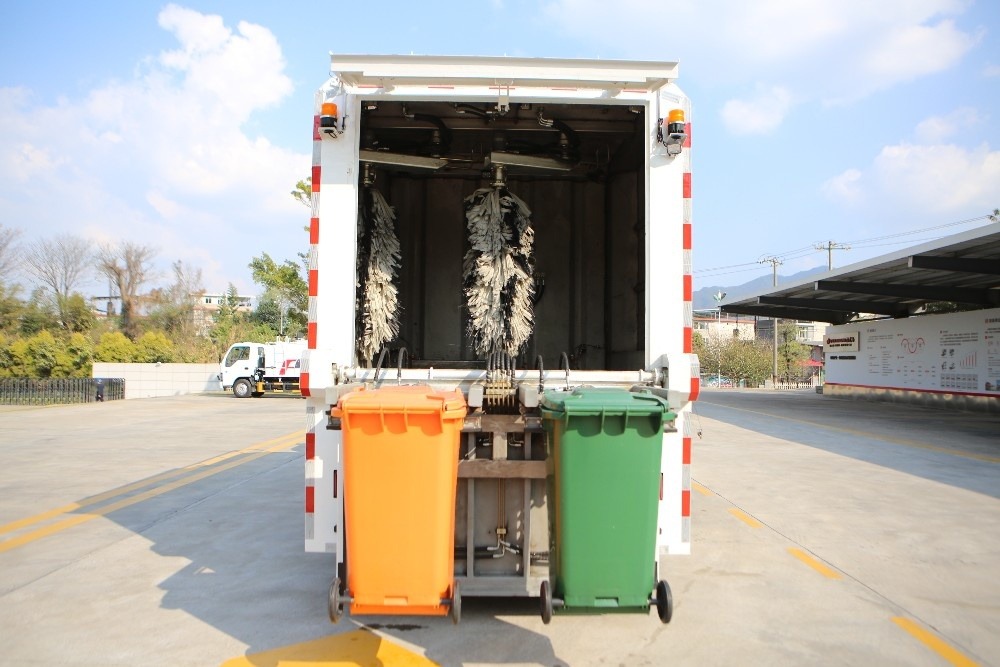
The interesting part of the truck is at the back. A door folds down here, with the lifting and clamping equipment built into the same assembly. Once the bin is clamped, a press of the cleaning button sets the wash in motion.
The Safety of a Flip-Down Tailgate
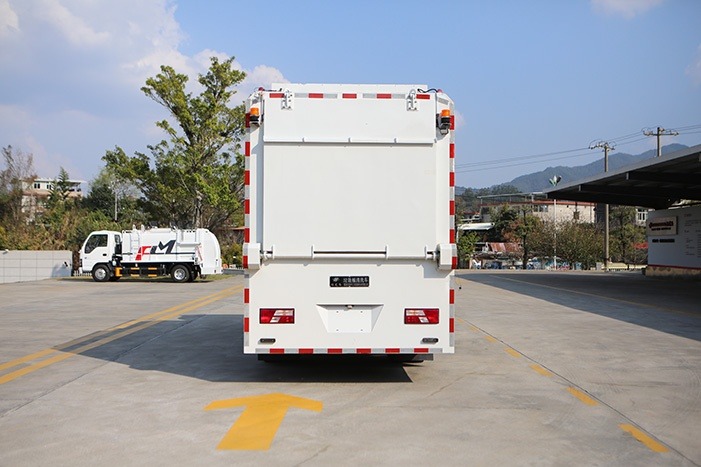
The FLM5080TQXJL6 uses a flip-down rear tailgate that is integrated with the lifting mechanism and the clamping mechanism. Because the tailgate forms part of the same assembly, operators never need to reach into the washing compartment or work near moving brushes during loading and unloading. This design keeps the working area on the outside of the vehicle and protects the crew from the hazards of moving machinery and high-pressure water.
Our FLM5080TQXJL6 dustbin cleaning truck accommodates standard plastic bins in two sizes, 120 L and 240 L. A route with these containers gives the washing team a definite starting point. Keep any other bin types separate when working out the lifting arrangements.
Before filling a schedule with addresses, sketch a washing stop. Put a waiting bin on one side, the truck in its working position and a place for the cleaned bin on the other. Use that sketch to work out the handover, including who moves the containers.
Combining Water Jets with Rolling Brushes
Inside the compartment, rolling brushes accompany the high-pressure water flushing. These are the two cleaning methods used together on this model. Include the inner surfaces of the bin when assessing the wash.
Look into the bin when judging the result, rather than stopping at its lid. Include the outside in the same inspection, and compare the washed container with the task the team was given. For high-pressure bin cleaning, the finished container is a better discussion point than a dramatic-looking jet of water.
Cleaning speed and daily capacity
Each full wash cycle on the FLM5080TQXJL6 takes around 90 seconds, which means the truck can clean up to 60 bins per hour in double-bin mode. These figures assume standard 120 L or 240 L plastic bins with normal soiling, using the combined brush-and-flush program. Actual output on a route will also depend on travel time between stops, container handling and how many bins need the heating or detergent mode.
Keeping Clean Water and Wastewater Separate
The Role of Each Onboard Tank
The FLM5080TQXJL6 carries 3,200 L of clean-water storage, a 3,500 L sewage tank and a 100 L detergent tank. Those are three distinct parts of the washing arrangement. Fresh water comes into the plan at the start; dirty water needs a place in the plan too.
A municipal washing schedule need not be complicated. Try writing one stop out in full: the collection point, which bins will be empty and the next place to service the water tanks. If the crew cannot follow that entry, go back to the sequence before adding more addresses.
Water Use Between Stops
How many bins can a full tank serve? Start by watching the chosen cleaning mode at work and recording actual water use. Allow for the rest of the stop as well, from bringing an empty bin forward to returning it after washing.
Matching the Cleaning Mode to the Bin
Single and Double Bin Cleaning
One bin or two? The FLM5080TQXJL6 offers either mode. The team can use the one-button wash after the containers have been clamped into position.
Try setting out the work in pairs where several empty bins await washing. A lone container can be assigned to the single-bin mode instead. Work through a few stops this way before settling how the route will run.
There is no reason to spend all the planning time on what happens inside the compartment. Make room for the bins on either side of it as well. A double-bin wash is only one stage between arriving at a collection point and leaving it ready for use again.
One-Key Cleaning Operation
Once the bins are clamped into the lifting assembly, a single button starts the full wash sequence — lifting, brushing, high-pressure flushing and lowering — without further operator input. This one-key function reduces training time for new crew members and keeps the operator free to handle the next container or prepare the stop layout. On a full route, the time saved at each stop adds up to a measurable gain in daily output.
Heating and Detergent Modes
Some bins need a different approach to the residue left inside. FULONGMA offers heating and detergent modes on the FLM5080TQXJL6 for that purpose. The detergent supply occupies a tank of its own, with a capacity of 100 L.
Fitting Bin Washing into Collection Work
Begin the timetable with empty bins becoming available. Agree the handover from the collection team, the vehicle position and the return of the washed containers. Treat all three as parts of the job, rather than leaving the last few metres of bin movement unassigned.
At a residential collection point, draw a path from bin storage to the back of the truck and back again. For a central washing area, try a layout with incoming containers on one side and finished ones on the other. Walk through the proposed sequence before putting it into the timetable.
Our road-cleaning vehicle covers several different jobs. For the bin washer, attention stays on the container and the water used to clean it. Give mobile bin washing a task of its own alongside refuse collection and street cleaning.
Conclusion
A bin goes into the wash; the used water stays with the truck. That is the starting point for understanding a trash bin cleaning truck, and FULONGMA builds the FLM5080TQXJL6 around it. Bring the lifting assembly, brushes, flushing and tank arrangements into the route plan, so washing receives as much thought as collection.
Take a closer look at FULONGMA sanitation equipment as you plan the next stage of your bin-cleaning work.
FAQ
Q: Can a trash bin cleaning truck wash both 120L and 240L bins?
A: Both sizes can go through the FLM5080TQXJL6, provided they are standard plastic bins. There is a choice of washing one container or two. For a route with a mixture of bins, set the other types aside for a separate lifting-interface check rather than treating volume as the whole answer.
Q: How many bins can a trash bin cleaning truck clean per hour?
A: The FLM5080TQXJL6 completes a full wash cycle in about 90 seconds and can clean up to 60 bins per hour when running in double-bin mode. This assumes standard 120 L or 240 L plastic bins with typical soiling. Route-level throughput will be lower once travel time and container handling are factored in.
Q: How does a bin washing truck hold dirty wash water?
A: Used water has its own tank on this truck. There is room for 3,500 L in the sewage tank, while the fresh-water tank holds 3,200 L. When mapping the working day, put a wastewater-emptying point on the route as well as somewhere to replenish the fresh-water supply.
Q: Does wastewater collection mean the water is recycled?
A: A wastewater tank tells you where the used water is stored. Its capacity does not describe a water-reuse function or a recycling rate. Plan this truck’s work around the separate tanks, with refilling and wastewater emptying arranged as two parts of the schedule before assigning the bin stops.
Q: When are heating and detergent modes useful?
A: Look at the residue left in the container when choosing a wash. The FLM5080TQXJL6 offers heating and detergent modes for this sort of task, with detergent carried in a 100 L tank. Try the intended mode, examine the washed bin and use the equipment instructions for its operating settings.