

For dust control, mist cannons send atomized water into the air, while ground spraying directs water onto a surface. Decide where the task is before choosing the outlet. A truck can carry both systems, but watering a road and aiming mist above a work area are separate jobs.
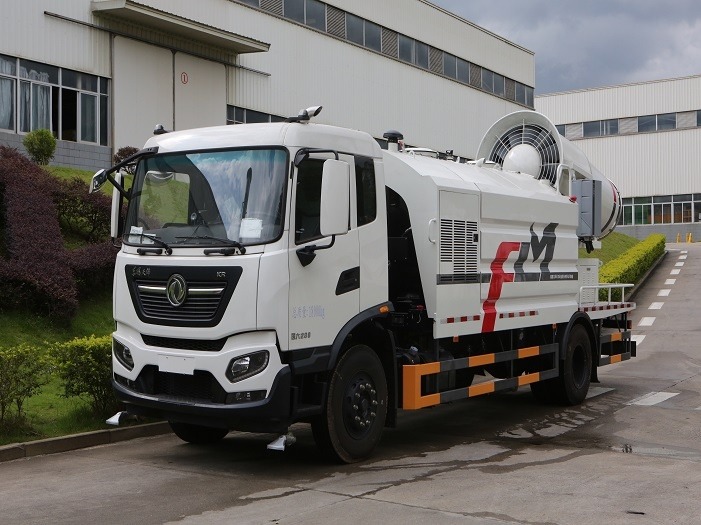
FULONGMA’s FLM5180TDYDF6 puts an air-assisted cannon and a low-pressure watering system on one vehicle. Follow the two water applications separately and its arrangement becomes easier to understand. The cannon’s reach is one part of the picture; the front sprinkler and side jets have their own roles.
Dust Control Starts with the Dust Source
Dust Suspended Above the Work Area
Picture the work area before looking at a maximum-range figure. Where should the spray be directed, and where can the truck stand? Put those positions on the site plan, with enough detail to distinguish the target from the road used to reach it.
The air-assisted cannon on this model produces fine mist and has adjustable direction. Its applications include dust suppression in mining enterprises and dust reduction in urban settings. For construction dust control, use the same starting question: which part of the work needs the mist?
Dust Raised from the Ground
Now consider the surface beneath the traffic. Ground watering applies water through the truck’s sprinklers or jets, with the front sprinkler on the FLM5180TDYDF6 serving daily watering and dust reduction. Adjustable side jets add another outlet for the low-pressure system.
Mark the road sections intended for watering separately from the mist-spraying positions. A plan can include both without calling them the same operation. Give the operator a clear description of the intended work at each location.
Where Mist Cannons Fit
Directing the Spray
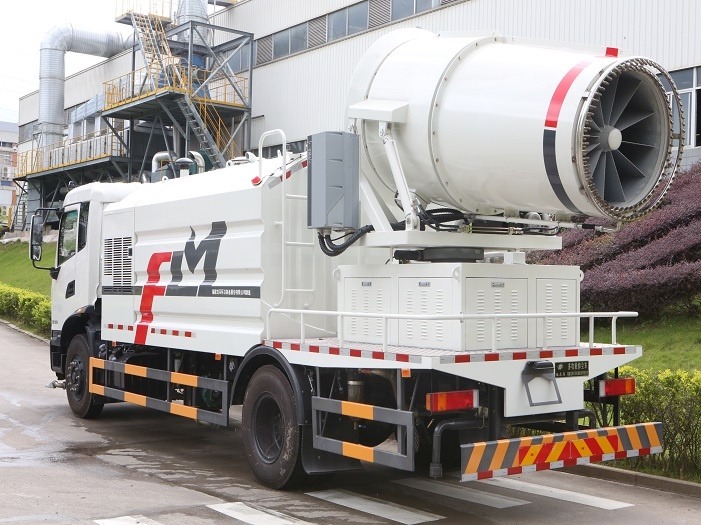
Our FLM5180TDYDF6 dust suppression truck has a maximum spray range of 100 m and a maximum spray height of 30 m. The cannon can move horizontally from −90° to 90°, with pitch adjustment from −10° to 60°. These are useful dimensions when considering the truck’s position relative to a working area.
Do not draw a circle around the parked vehicle and label everything inside it treated. Direction still matters, as does the position chosen for the task. A target to the side of the truck calls for a different arrangement from one in front of it.
Adjusting Air and Water Output
The cannon’s fan and water-pump speeds are adjustable through frequency converters. The operator can control air and water output, changing the spray range and working time. On this model, spray volume runs from 0 to 160 L/min and spray-water pressure is 2 MPa.
Start the discussion with the intended task rather than the highest available setting. Record where the truck stood and which spray setting was used, then observe the application from that position. Keep those details together when the team returns to discuss the next visit.
Where Ground Spraying Fits
Front Sprinklers and Side Jets
The low-pressure pump is a self-priming, two-stage centrifugal type driven by the chassis engine. Front sprinkling supports watering, dust reduction and pavement cleaning, while the side nozzles allow adjustment of the jet direction. Front cleaning and rear watering are also available as optional functions.
For a water sprinkler truck working along a road, name the outlet in the work record. Was the task front sprinkling, side jetting or another fitted function? That small amount of detail makes the record more useful than an entry saying only that the truck was spraying.
Using Both Functions on One Route
There is no need to force the whole route into one spraying method. Plan the ground-watering sections first, then mark the places where directed mist is intended. Describe the sequence so the crew can see where one task ends and the next begins.
Within our multifunctional dust suppression truck, configurations differ. Build the work plan around the vehicle that will actually carry it out. If the route calls for an optional rear-watering arrangement, include that equipment choice explicitly instead of assuming every truck has it.
Connecting Water Flow with Working Time
Keeping Spray Circuits Distinct
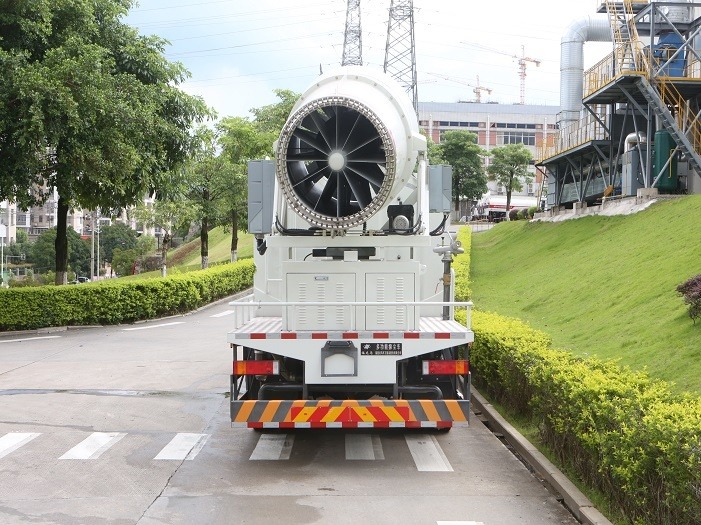
The water tank on the FLM5180TDYDF6 holds 9.8 m³. The mist system, meanwhile, has its own adjustable flow range of 0–160 L/min. One figure describes the tank; the other belongs to a water application that can be changed during the work.
Keep a sprinkler-pump flow figure out of a mist-cannon calculation. Likewise, avoid assigning the cannon’s maximum flow to every minute of a mixed route. First identify which circuit was operating, its setting and how long it ran; only then consider what the figures say about that job.
A water spray dust suppression schedule should leave room for this distinction. Write down the mist-spraying periods separately from ground watering, even when both take water from the same vehicle. Do not turn a tank size into a promised full-shift runtime.
Planning Refilling Around the Task
Give refilling a place in the schedule from the outset. Mark the refill location alongside the road sections and stationary tasks, then compare the plan with actual water use. Use the first working record to adjust the next schedule, rather than carrying an assumed runtime forward unchanged.
FULONGMA equips this model with a low-water-level alarm and a 200-mesh filter for impurities in the working water. Fan and pump adjustment, water storage and the spray outlets all belong in the discussion of how the vehicle is used. When looking across the road-cleaning equipment, give those details attention alongside spray reach.
Conclusion
Dust control with water trucks begins with the location of the task. Mist spraying and ground watering offer different ways to apply water, and the FLM5180TDYDF6 brings both onto a single vehicle. Keep their outlets, settings and working periods separate in the plan to make the most of that flexibility without losing sight of water use.
Explore FULONGMA’s spraying configurations above to match the vehicle’s water applications to your working areas.
FAQ
Q: How does mist spraying differ from ground watering?
A: A mist cannon uses an air-assisted sprayer to direct atomized water into the air. Ground watering sends water onto the surface through sprinklers or jets. The FLM5180TDYDF6 carries both systems, so begin with the area that needs attention and describe each task separately in the operating plan.
Q: Can one truck provide both mist spraying and ground watering?
A: Yes. The FULONGMA FLM5180TDYDF6 has an air-assisted cannon and a low-pressure watering system, including front sprinkling and adjustable side jets. Additional front cleaning and rear watering functions are optional. Use the equipment fitted to the particular vehicle when setting out the route, rather than assuming all configurations are alike.
Q: Does maximum spray range describe every working condition?
A: No. The 100 m figure describes the maximum spray range of this FLM5180TDYDF6 configuration. It is useful for understanding reach, but it does not replace a plan for the target area and vehicle position. Cannon direction and adjustable air and water output also form part of the spraying arrangement.
Q: Does pump flow equal total water consumption during a shift?
A: No. Flow relates to a particular circuit and setting, whereas a shift can include several tasks with different operating periods. Keep mist spraying and low-pressure watering separate in the work record. Record the settings and time spent on each before using flow figures to discuss total water use or refilling.