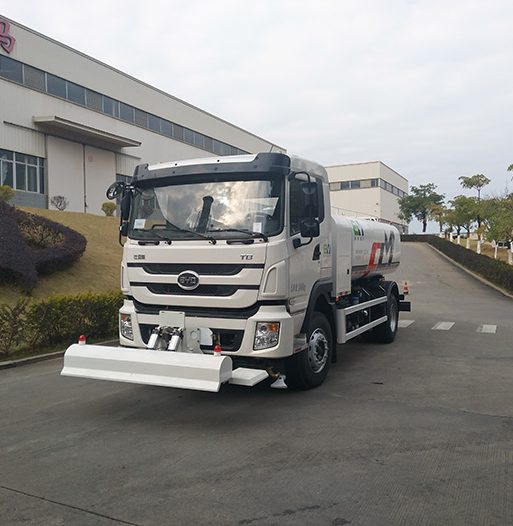
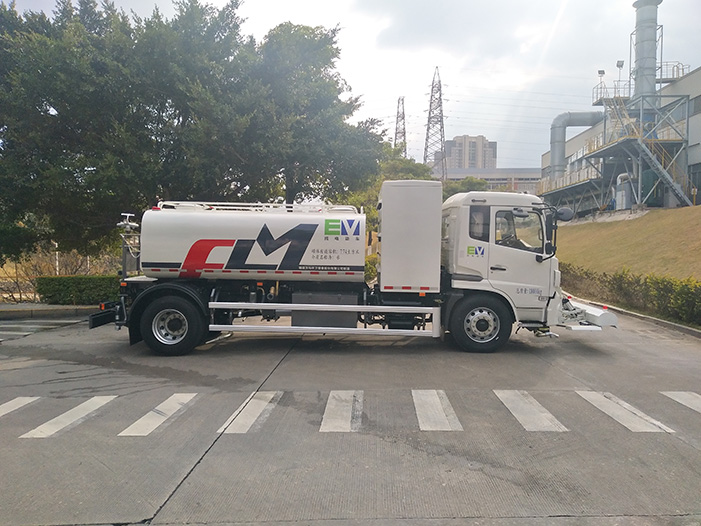
The best electric high-pressure cleaning truck is the one that matches the work profile before the vehicle is compared by size or battery capacity. Start with the surfaces to be cleaned, the distance between water points, the required spray pattern, and the route environment. Then compare tank volume, flushing width, sprinkling width, rear-gun range, pump information, and optional devices. This approach keeps selection tied to daily sanitation work rather than isolated specifications.
Start With the Work Profile
Define the route before the truck
A road washing truck working on city streets faces a different task from a dust suppression vehicle serving a highway approach, port, or dock. Urban work may require repeated curb and public-square cleaning, while industrial routes may prioritize open pavement, access lanes, and flexible use around operating areas. Write down the route width, surface type, travel pattern, and cleaning targets before comparing models.
The question is not simply how much water the truck carries. It is how the water is delivered, how often the route requires refilling, and whether the vehicle can move from a wide pass to a focused cleaning task. A municipal sanitation vehicle becomes more useful when its functions reflect the variety of the route.
Match Water Delivery to the Surface
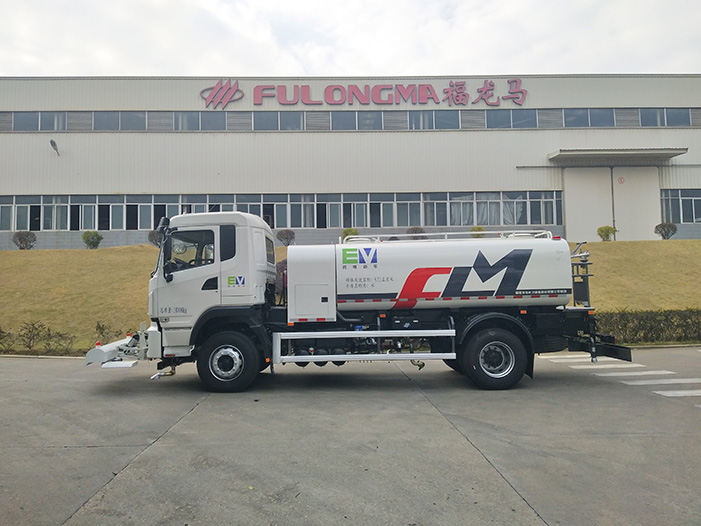
Compare flushing and sprinkling coverage
Flushing and sprinkling serve different purposes. The truck configurations provide a flushing width of at least 24 m and a sprinkling width of at least 16 m for the shared high-pressure sprinkler category. FLM5180GQXBYBEV also lists a cleaning width of at least 3 m. These figures should be read as route-planning inputs: wide pavement work, general watering, and defined cleaning lanes may call for different operating choices.
A broad pattern can reduce repeated passes on an open square or access road, while a narrower controlled pattern may suit a constrained street edge. A highway team may value coverage and traffic separation, whereas a city team may focus on keeping water close to the curb. The truck should be judged by how well its modes fit the site, not by one maximum number.
Use the rear gun for difficult targets
The rear high-pressure water gun adds a separate selection criterion. Its listed range is at least 50 m, and it can direct water toward targets at different heights and difficult spots. The adjustable column or mist pattern supports a concentrated stream when residue needs more force and a finer spray when the task calls for controlled distribution.
This feature can influence the choice more than a small difference in tank volume when the route includes guardrails, curb lines, building approaches, port edges, or other offset surfaces. FULONGMA also identifies optional upper and lower spraying, side watering, sewer dredging, and related devices. Those options should be evaluated against actual work orders rather than added without a clear use case.
Check Tank, Pump, and Battery Together
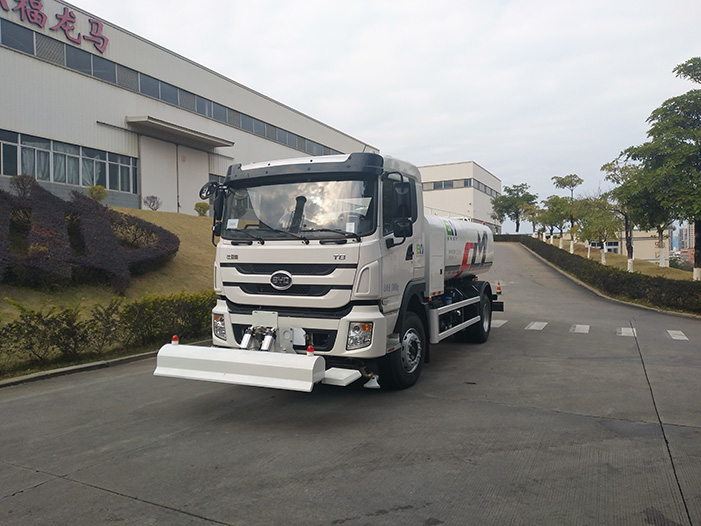
Tank volume sets the rhythm of the route
The FLM5180GQXHDBEV configuration has an 8.23 m³ water tank, while the FLM5180GQXBYBEV configuration has an 8.12 m³ tank. The difference is small on paper, so the decision should not stop there. Look at the expected spray mode, refill points, route length, and whether the vehicle will alternate between broad watering and targeted cleaning.
Pump information explains the operating role
Both configurations list a sprinkler pump head of 110 m and a sprinkler pump flow of 50 m³/h. The BYBEV configuration additionally identifies the RTX150.100N high-pressure pump model. These details help separate general sprinkler operation from a configuration described with a high-pressure pump model and a defined cleaning width.
Battery capacity is one part of the decision
The two electric water truck configurations list different battery capacities: 350.08 kWh for FLM5180GQXHDBEV and 217.6 kWh for FLM5180GQXBYBEV. Both use a lithium iron phosphate battery, but capacity alone does not describe a complete workday. Route planners still need to align vehicle use, water stops, operating conditions, and local charging arrangements with the intended schedule.
Choose the Configuration That Fits the Route
The FLM5180GQXHDBEV configuration lists a 120 kW rated chassis motor, an 89 km/h top speed, and an 8.23 m³ tank. The FLM5180GQXBYBEV configuration lists a 150 kW rated chassis motor, an 85 km/h top speed, an 8.12 m³ tank, a stated cleaning width of at least 3 m, and the RTX150.100N high-pressure pump model. The two configurations also have different stated dimensions.
For an operator, the practical comparison is straightforward. Select the configuration whose listed functions best match the route’s main task, then check the size, access roads, turning space, water infrastructure, and optional devices. A vehicle that fits the operating environment is easier to integrate into a daily sanitation schedule than one chosen only for a headline specification.
Operational Checks That Improve Selection
A strong selection process includes the people who will run the route. Ask operators where they need the rear gun, which surfaces create repeat work, how often low water levels occur, and whether upper, lower, or side devices would remove manual work. The low-water-level alarm listed for the water tank can support operating awareness, but it should complement a clear refill and route-control procedure.
It is also useful to compare the vehicle against the physical site. Check road width, height restrictions, dock access, turning areas, storage, water filling points, and the visibility of spray around pedestrians or equipment. These practical checks make the final choice more defensible and help FULONGMA equipment fit into an existing municipal or industrial cleaning workflow.
Conclusion
Choosing an electric high-pressure cleaning truck becomes easier when the route leads the decision. Match flushing, sprinkling, rear-gun work, tank volume, pump information, battery capacity, dimensions, and optional devices to the surfaces and service pattern that matter most. FULONGMA offers two electric configurations with different strengths, giving sanitation teams a clear starting point for road washing, highway maintenance, and dust-control planning.
Compare the FULONGMA configurations against your route requirements to identify the right fit.
FAQ
Q: What is the first question to ask when choosing an electric high-pressure cleaning truck?
A: Begin with the work profile. Identify the road or site surfaces, cleaning targets, route width, refill points, and whether the main task is flushing, sprinkling, dust suppression, or targeted washing. Once those needs are clear, the tank, pump, battery, coverage, and dimension data become much easier to compare.
Q: How do flushing width and sprinkling width affect model selection?
A: Flushing width relates to forceful surface washing, while sprinkling width relates to broader water distribution. A wide road, square, or access area may benefit from wider coverage, while a constrained street edge may need more controlled operation. The route layout should determine which width is most important for the team.
Q: Is the largest battery always the best choice?
A: No. Battery capacity is important, but it should be considered with tank volume, spray mode, water stops, operating conditions, vehicle dimensions, and the planned schedule. The HDBEV and BYBEV configurations publish different battery capacities, so the better choice depends on how the vehicle will actually be used.
Q: Which FULONGMA configuration is better for defined cleaning lanes?
A: The FLM5180GQXBYBEV configuration includes a cleaning width of at least 3 m and the RTX150.100N high-pressure pump model. That makes it a natural configuration to examine for defined cleaning work, while the final decision should also consider tank volume, route access, spray needs, and the full operating environment.